CULTURE & HERITAGE · NAGOYA

Arimatsu Shibori: Four Centuries of Indigo Heritage Along the Tokaido

Born in 1608 along the historic Tokaido highway connecting Kyoto and Edo, Arimatsu Shibori is one of Japan’s most celebrated textile traditions. Defined by intricate hand-binding (shibori) and rich indigo pigments, this 400-year-old craft transformed a quiet Nagoya post town into an enduring sanctuary of Japanese living heritage.

Duration

90 min

Group size

2-5 guests

From

¥12,800

Location

Nagoya

By Rhojani Francisco

Category: Traditional Crafts

Reading time: 15 min

Most modern textiles are produced by high-speed machinery, but authentic Arimatsu Shibori remains entirely reliant on human touch, precision folding, and thread tension. Preserved within Nagoya’s historic Arimatsu district—a designated Japan Heritage Site—master artisans continue to practice techniques developed during the Edo period, turning raw cotton and natural indigo dye into timeless works of art.
I

歴史 · Historic Edo-Period Heritage

ARIMATSU SHIBORI: The Living Heritage of Japanese Indigo Arts

At a Glance

To trace the origins of Arimatsu Shibori is to uncover four centuries of Japanese textile mastery along the historic Tokaido highway. Founded in 1608 during the early Edo period, this specialized resist-dyeing technique transformed raw cotton into intricate geometric art, offering travelers journeying between Kyoto and Edo an enduring symbol of regional craftsmanship.

By the height of the Edo period, Arimatsu had
developed over a hundred distinct hand-binding methods—ranging from delicate thread-wrapping (kumo) to precise wooden clamping (sekka). Each pattern relies on human touch, precise thread tension, and natural indigo dye baths. Today, this living heritage endures in Nagoya’s preserved historic district as a designated Japan Heritage craft.

The Geometry of Indigo: Preserving Edo-Period Textile Arts

Unlike mass-produced modern textiles, authentic shokunin (artisans) in Arimatsu continue to preserve four centuries of resist-dyeing traditions. Rather than treating these methods as static museum artifacts, the historic Arimatsu workshop remains a living workspace. Here, Edo-period folding, clamping, and binding techniques are continuously practiced to transform raw cotton into intricate geometric art, honoring a textile lineage that spans over 400 years along the Tokaido road.

Specialized wooden clamps (itajime), precision binding threads, and hand-carved blocks remain essential tools for Shibori master craftsmen. Likewise, natural indigo dye baths (aizome) naturally penetrate the exposed fabric fibers, while delicate thread tension regulates pattern precision. Together, these elements preserve the organic beauty, symmetry, and tactile craftsmanship of authentic Japanese textile design.

The true essence of this heritage lies in Monozukuri, Japan’s traditional philosophy of craftsmanship defined by patience, precision, and deep respect for natural materials. Recognized as a designated Japan Heritage site, Arimatsu offers an authentic look into living history. Through this exploration into Nagoya’s textile traditions, you will discover these artistic values firsthand and gain a profound appreciation for the heritage behind Japanese indigo dyeing.

  • The Tokaido Legacy
    Discover how a 17th-century post town along feudal Japan’s primary highway evolved into the nation’s premier center for resist-dyeing, developing over a hundred distinct hand-bound techniques.
  • The Indigo Innovation
    Explore how Edo-period artisans harnessed natural indigo and intricate thread-binding methods to create wearable masterpieces that captivated traveling samurai, lords, and merchants alike.

400

YEARS OF EDO HERITAGE

10+

TRADITIONAL PATTERNS

The Indigo Sanctuary: Architecture of an Edo-Period Workshop

Centuries ago, long before the advent of synthetic dyes and industrial textile machinery, the traditional kobo (artisan workshop) was built around environmental control. The architecture of a classic Arimatsu machiya (historic merchant townhouse) relies heavily on high timber ceilings and open courtyard spaces, prized not merely for their architectural elegance, but for natural ventilation and consistent daylight. This careful orchestration of space allowed Edo-period master dyers to monitor the precise oxidation of indigo dye baths (aizome), establishing a rigorous foundation of textile art that remains paramount in Nagoya today.

Step beyond the wooden storefront to discover a workspace where every tool has a purpose. Precision binding needles, hand-carved wooden clamps (itajime), and specialty threads rest beside deep ceramic dye vats. Meanwhile, every surface is carefully arranged to optimize natural light and fluid movement. This thoughtful design allows the artisan to fold, twist, and bind complex fabrics with speed, precision, and harmony.

  • A Textile Time Capsule: The Enduring Ecosystem
    Today, many commercial textile factories rely on automated digital printing. In contrast, the authentic Arimatsu Shibori community preserves traditional hand-crafting methods. Here, thread tension, pattern alignment, and dye saturation depend on decades of personal experience rather than machinery. As a result, every finished piece reflects centuries of Japanese artistic wisdom.

“True Shibori is not simply the mechanical act of binding cloth with thread; it is the beautiful culmination of human patience, historical wisdom, and the uncompromising spirit of the dedicated artisan.” Primary Field Notes, Arimatsu Kogei

II

技法 · Artisanal Binding

TACTILE PRECISION: The Spirit of Monozukuri and the Geometry of Resist-Dyeing

First, traditional Arimatsu Shibori begins with a profound respect for the raw cotton fabric. Rather than relying on automated machinery or uniform chemical dyes, master dyers emphasize tactile precision and the philosophy of Monozukuri (the pursuit of craft perfection). Each textile design requires a tailored binding pressure and fold structure. As a result, every pattern naturally captures the organic depth, sharp contrast, and timeless character of Japanese indigo dyeing.

Preserving Traditional Resist-Dyeing Heritage

Kukuri Thread-Bound Resist

Hand-Wrapped Thread Binding · 括り絞り

Traditional Arimatsu Shibori relies on micro-precise thread binding, expertly wrapped around pinched cloth to resist indigo penetration. Performed entirely by hand using specialized wooden hooks and fine threads, this painstaking technique creates delicate, organic motifs—such as spiderweb (kumo) and ring patterns—that serve as an essential cornerstone of Japan’s centuries-old textile craftsmanship.

Itajime Wooden Clamp-Resist

Precision Block Clamping · 板締め絞り

While modern factories rely on mass-produced screen printing (nassen), this authentic Nagoya masterclass preserves traditional geometric block-clamping techniques. Using hand-carved wooden shape blocks and custom pressure clamps, master artisans prevent dye absorption along intricate fabric folds, creating crisp, kaleidoscopic symmetry that showcases the timeless wisdom behind Japanese resist-dyeing.

The Master's Touch: Tools and Techniques of Arimatsu Artisans

During the rapid industrialization of modern textiles, many commercial manufacturers adopted automated screen printing and synthetic chemical dyes. In contrast, traditional Arimatsu Shibori masters continue to practice authentic hand-binding and indigo resist techniques (aizome). Instead of prioritizing mass-production speed, they work with meticulous human precision and generations of inherited tactile knowledge.

Likewise, master dyers continue to rely on specialized handcrafted tools—from curved thread-snips to custom wooden clamping blocks (itajime). These specialized instruments demand exceptional skill, tactile feel, and regular maintenance. However, only a small number of traditional toolmakers still produce them today. Therefore, preserving these specialized craft tools directly sustains Japan’s living textile heritage along the historic Tokaido road in Nagoya.

The Alchemy of the Dye Bath

Immersion Dyeing

The Dye Bath Ritual · 染色

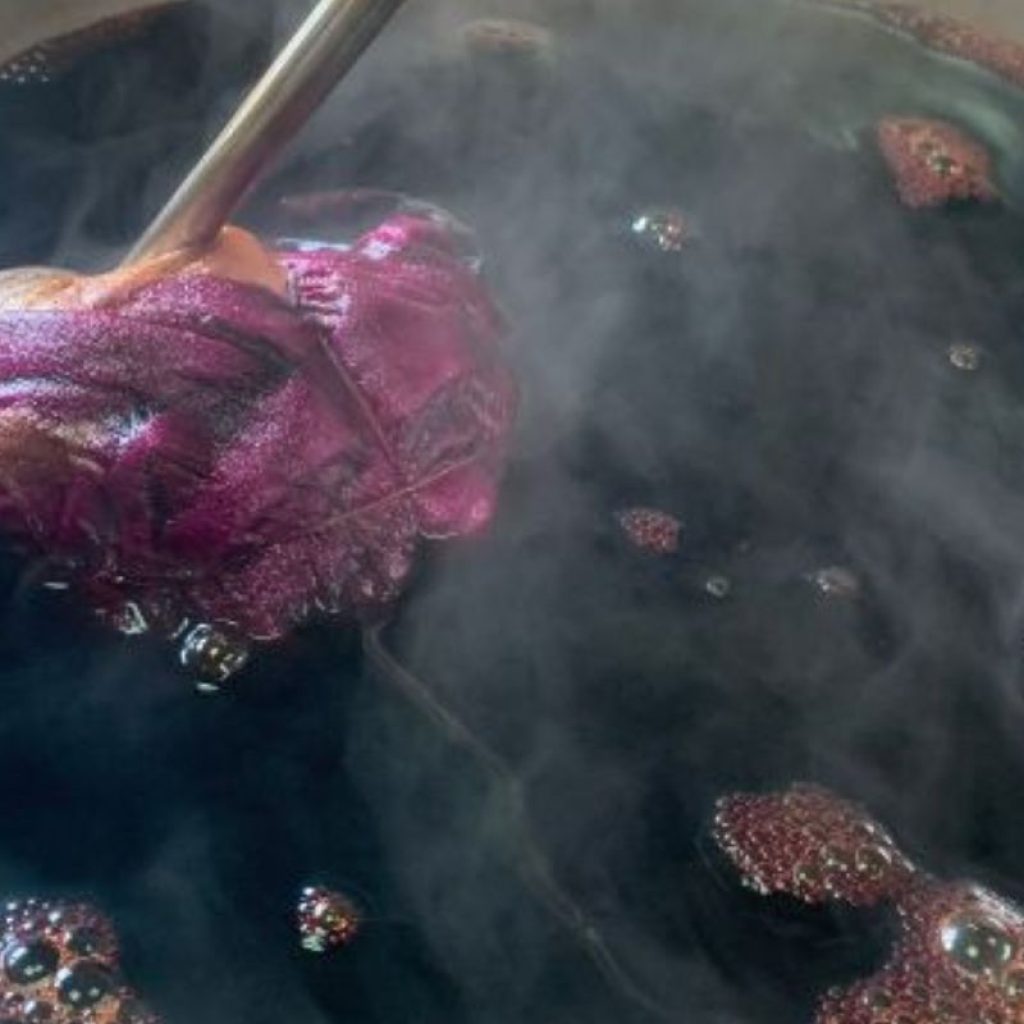
Next comes senshoku (immersion dyeing). The tightly bound fabric is submerged into a steaming dye bath, where precise heat and timing allow deep pigments to saturate the exposed cotton fibers. As the liquid penetrates the cloth, the tightly bound threads and clamps hold strong—protecting the un-dyed areas beneath to form high-contrast geometric patterns.

a

III

模様 · Arimatsu Kogei Motifs

PATTERN LANGUAGE:The 5 Sekka Shibori Variations

At Arimatsu Kogei—the oldest workshop currently offering hands-on shibori experiences in Arimatsu—Veteran Dyer Hamajima-sensei specializes in Sekka Shibori (雪花絞り · Snow Blossom). In this Edo-period technique, folded cotton triangles are clamped and dip-dyed. Subtle changes in fold density and immersion depth yield completely distinct geometric motifs.

The Visual Dictionary of Historic Arimatsu Motifs

Unlike uniform digital prints, every classical Shibori design carries centuries of cultural symbolism:

  • Dense Indigo (密雪花)
    Tight triangular pleating creates crisp, high-contrast starburst flowers set neatly against white cotton.
  • Bold Blossom (大輪雪花)
    Deeper dye immersion allows rich indigo gradients to bleed softly into fully expanded floral petals.
  • Dual-Hue Indigo & Green (二色染め)
    A two-stage dip-dyeing process layering deep indigo blossoms with delicate teal accents.
  • Lattice Starburst (網目雪花)
    Overlapping triangle edge dips form an interconnected, continuous blue geometric web.
  • Sakura & Indigo (紅藍雪花)
    Deep indigo geometric frames centered with vibrant blossom-pink hearts—a classic Edo color pairing.

IV

流れ · Nagare

EXPERIENCE FLOW: The Journey of Arimatsu Shibori Craftsmanship

TIMEWHAT HAPPENSNOTES
10minHistorical Orientation & WelcomeMeet your master craftsman inside the historic workshop, suit up in a traditional artisan apron, and receive a brief introduction to Arimatsu’s 400-year indigo dyeing legacy along the Tokaido road.
20minPattern Geometry (Folding & Clamping)Select your preferred geometric motif (such as Sekka Snow Blossom). Under artisan guidance, master the precise triangular folding and secure wooden clamping blocks (itajime) or thread bindings (kukuri).
20minThe Indigo Dye Bath (Senshoku)Plunge your bound cotton into a natural indigo dye vat (aizome). Experience the biological oxidation process as exposure to atmospheric air instantly converts the green dye bath into iconic Japanese indigo blue.
25minUnbinding & Pattern Reveal (Ito-toki)Carefully sever the binding threads and remove clamps using specialty craft blades. Rinse away excess pigment to reveal your high-contrast geometric white-and-blue resist patterns.
15minFinishing & Heritage PresentationGently dry and set your completed textile piece. Mount your creation on presentation paper or frame it for display—ready to take home as a personal piece of Nagoya living history.

What’s included: Premium Japanese cotton fabric of your choice, direct master craftsman instruction, a dedicated English cultural interpreter, traditional natural indigo dyes and specialty tools, a custom display mount with an official workshop signature, protective travel framing, and your own take-home Arimatsu Shibori masterpiece.

感想 · Guest voices

What people say after the visit

John from australia

“I had such a great time at this kintsugi workshop in Kyoto! The process of repairing ceramics with gold was fun, hands-on, and surprisingly calming. The best part was meeting the artist—he was super friendly and made the whole experience really enjoyable. I left with a beautiful piece to take home and a memory that feels very “Kyoto.” Definitely recommend if you’re looking for something unique to do here!”

Arushi from Seattle, WA

“This experience is truly unique and exceptional! It is keeping alive a tradition using only naturally derived ingredients and a great spirituality behind it. The sensei, apprentices and translators were all incredibly warm, passionate and knowledgeable! You are missing out if you don’t do this in Kyoto!”

Book this experience

Authentic Hand-Bound Shibori

2 Guests

Pair Workshop

¥37,300

Standard Pair Plan

Immerse yourselves in an intimate, hands-on Arimatsu Shibori workshop designed for two. Master precision folding and natural indigo resist-dyeing (aizome) under direct craftsman instruction.

5 Guests

Group Plan

¥70,000

Group Value Plan

Enjoy our best per-person rate for up to 5 guests. Complete with dedicated master instruction, full access to authentic indigo dye vats, specialized tools, and English cultural interpreter support.

6+ Guests

Larger groups

Enquire

Custom Private Session

For 6 or more guests, send us an inquiry to arrange your private group experience. Our team will tailor a private session and workshop space to fit your group’s schedule and travel needs perfectly.

よくある質問 · Before you book

Frequently asked questions

Natural indigo dye (aizome) is 100% organic, non-toxic, and chemical-free. While wet indigo can temporarily tint skin, we provide full protective aprons and gloves throughout the workshop. Any minor skin contact washes off naturally within a day or two. Historically valued for its antibacterial and insect-repellent properties, authentic indigo dyeing is completely safe for all guests.

Unlike modern synthetic tie-dye using liquid squeeze bottles, authentic Arimatsu Shibori is a 400-year-old Tokaido craft heritage. Instead of random color swirls, you master micro-precise resist methods—such as wooden block clamping (itajime) and thread wrapping (kukuri)—submerging cotton into fermented indigo vats to create crisp, historical geometric motifs (sekka).

Yes, absolutely. After unbinding and setting your textile, we thoroughly dry and package your completed cotton piece in custom protective travel wrapping. Because your artwork is a lightweight cotton textile, it packs effortlessly into carry-on or checked luggage without moisture, weight, or airport customs concerns.

The workshop is located in the preserved Arimatsu historic district in Nagoya. From Nagoya Station, take the Meitetsu Nagoya Line directly to Arimatsu Station (approx. 20–25 minutes). The studio is just a 5-minute walk from the station along the preserved Edo-period merchant street (machiya streetscape).

Year-round · Private · 2–6 guests

Available whenever you are ready

Availability is limited. Enquire to check your preferred dates — we typically respond within 24 hours.