-Authentic Experience · Nagoya

Great Buddha Master Masayoshi Kametani on His Half-Century Technique of Reviving Ceramics with Gold Kintsugi

In Nagoya, Great Buddha Master Masayoshi Kametani shares his 50-year art expertise through an authentic hands-on Kintsugi experience.
(Interviewed on July 3rd, 2026 at Nakamura Park Toin Chaseki Tea House, Nagoya)

Location

Nakamura Park, Nagoya

By Lily Terada

Category: Cultural Experience 

Reading time: 12 min

Many workshops rush straight to the gold. This experience invites you to slow down, honor every step of the ancient craft, and master the art of natural lacquer alongside a true Japanese master artisan.
I

物語 · Monogatari

THE LEGACY:Who is Great Buddha Master Masayoshi Kametani?

At a Glance

Born in 1952 in Aichi Prefecture, Nagoya City , Master Masayoshi Kametani’s background is rooted in traditional local art and craftsmanship. His family line traces back to original roof tile makers (Onigawara makers) in the former Nishi District. Raised in an environment where crafting and drawing were close at hand, he attended the art department at Aichi Prefectural Asahigaoka High School. Although he initially aimed to become a painter, he decided to pursue sculpture because he felt he was not skilled at painting. After graduating, he set up a studio in a third-floor storage area at home and began creating sculptures while working part-time jobs.

In 1972, Kametani entered a dedicated apprenticeship under the renowned master Yoshiyuki Nagae. Under Nagae’s mentorship, he spent years mastering intricate techniques while earning prestigious accolades, including multiple honors at the prestigious Nitten and Nissho national exhibitions. His artistic evolution transformed from early human-body studies and Greek mythology themes toward complex, spiritual sacred monuments. In 2012, his decades of technical excellence earned him the title of “Great Buddha Master” (大仏師号 – Daibutsushi-go)  alongside the honorary Buddhist name “Ekyo” (慧慶).

Authentic Urushi Restoration in Seto and Nagoya

Beyond his monumental sculpture career, Master Masayoshi Kametani brings his deep expertise directly to the art of ceramic restoration. Specifically, his Kintsugi methodology relies strictly on traditional, organic materials rather than synthetic adhesives. Located near Nagoya in historic Seto City—the traditional center of Japanese ceramics—his studio operates as a dedicated sanctuary for slow, mindful craft.

Furthermore, Kametani-sensei’s workshop upholds the exact multi-step restoration principles used for centuries. Indeed, working directly with raw tree lacquer (urushi), wheat flour (mugi-urushi), and clay powder (sabi-urushi) provides a authentic connection to traditional Japanese heritage. This hands-on process demonstrates that historic lacquer craftsmanship remains an active, living art form today.

Consequently, every session offers a complete commitment to natural materials and expert guidance. To understand the foundation of this master-led experience, observe the primary pillars behind his atelier:

50+

YEARS OF mastery

16

SOLO EXHIBITIONS

100%

natural urushi

Lessons from Master Nagae Yoshiyuki and the Revival of Dry Lacquer

Reflecting on his artistic journey, Master Masayoshi Kametani shares the core philosophy that has guided his craft for over four decades. Having spent 33 years learning directly under his late mentor, Nagae Yoshiyuki, Kametani-sensei recalls the profound lessons passed down to him regarding the true mindset of a sculptor

“Hands will naturally become dexterous on their own, so make sure your mind is always leading the way.” Masayoshi Kametani, quoting his mentor Nagae Yoshiyuki

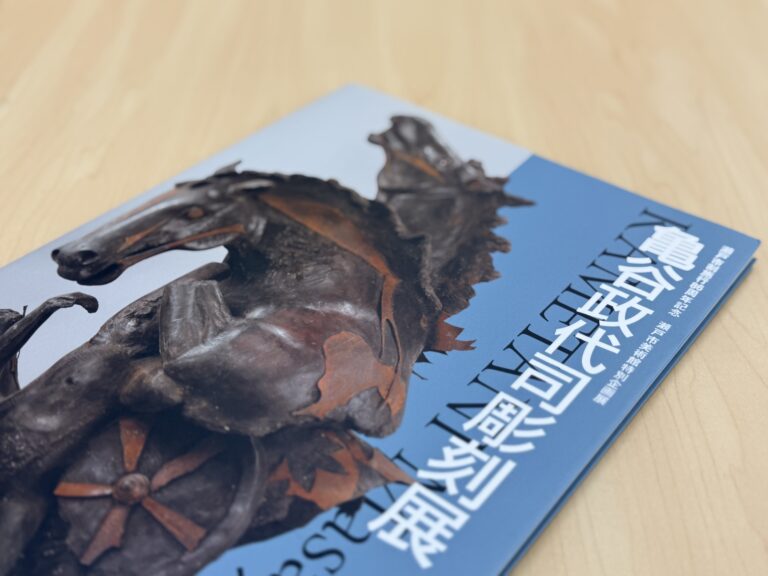
Cover of Masayoshi Kametani’s sculpture exhibition catalog showing a detailed sculpture of a horse on a blue background.

Furthermore, Kametani-sensei notes that during his early days, he could not fully grasp the true depth of his teacher’s words. However, over time, these teachings naturally soaked into his body and mind, shaping his core artistic approach of deconstructing and rebuilding the human form to construct necessary sculpted elements.

Indeed, keeping his late mentor’s wish in his heart, Kametani-sensei continues to take on new creative challenges even into his sixties. He remains dedicated to the revival of historic Kanshitsu (dry lacquer sculpture)—a unique, ancient Japanese technique crafted using raw lacquer (hon-urushi), hemp cloth, paper powder, or clay powder. Though dry lacquer creation declined after the Fujiwara period as wooden sculptures became dominant, Kametani-sensei continuously applies these traditional, labor-intensive lacquer methods across his lifelong work and workshop experiences today.

II

作品· Sakuhin

MONUMENTAL LEGACY: Celebrated Sculptures and Sacred Works Across Aichi


To truly appreciate the mastery behind Master Masayoshi Kametani’s Kintsugi guidance, one must look at his monumental contributions to Japanese sculpture. Over his 50-year career, Kametani-sensei has crafted remarkable public installations, award-winning gallery sculptures, and sacred temple works throughout Aichi Prefecture and neighboring regions. Rather than existing only behind museum glass, his large-scale bronze monuments, fiber-reinforced plastic (FRP) works, and traditional dry lacquer (Kanshitsu) statues stand as living cultural landmarks integrated into local landscapes.

Landmark Public Works and Award-Winning Sculptures in Aichi

  • Miyoshi Town (Miyoshi City, Aichi): Following the 1998 Art Hill Miyoshigaoka Sculpture Festa, Kametani-sensei won the Grand Prix for his work “San Shito” (Three Apostles). His award-winning work “Ama no Kawara” (Milky Way) was also officially selected and permanently installed within Miyoshi Town’s public art landscape.

  • Inuyama City, Aichi: Located at Zuisenji Temple, his impressive 3.6-meter-high bronze sculpture stands preserved as a landmark temple installation (installed in 1998).

  • Seto City Art Museum (Seto City, Aichi): In 2015, marking the 86th anniversary of Seto City’s municipal organization, Kametani-sensei was honored with a dedicated retrospective solo exhibition. Highlighted exhibit works included his monumental dynamic pieces such as “Iron Horse” (鉄の馬, 2014), “Tetsujin” (鉄人, 2011), and “Danae” (ダナエ, 2007).

  • Exhibition Highlights Across Aichi: Over decades of participating in Nitten and Nissho exhibitions, he created acclaimed sculptures such as “Yume Mō Ippai” (1985), “THE MAN” (1988), and “Ki-Un” (祈雲, 2013).

III

繋がり · Tsunagari

FROM MONUMENTAL SCULPTURE TO KINTSUGI:How Kintsugi Connects to Monumental Sculpture

While shaping monumental statues and restoring broken ceramics might seem like two separate worlds, for Master Masayoshi Kametani, they are deeply intertwined expressions of the exact same discipline. Transitioning from decades of large-scale sculpture into the delicate, intimate art of Kintsugi was not a departure from his life’s work, but rather its natural, refined evolution.

The Technical Bridge: Why a Sculptor’s Touch Defines Authentic Kintsugi

At its core, authentic Kintsugi is far more than painting gold lines on ceramic—it is a physical, three-dimensional act of structural engineering and material mastery:

  • Mastery of Natural Binders (Urushi Science): In Dakkatsu Kanshitsu (dry lacquer sculpture), Kametani-sensei built large-scale temple figures by combining raw tree lacquer (hon-urushi) with organic materials like hemp cloth, clay powder, and wheat flour. This is the exact same traditional material science required in Kintsugi, where mugi-urushi (flour and raw lacquer) creates a permanent structural bond and sabi-urushi (clay powder and lacquer) fills missing ceramic gaps.

  • Structural Intuition and Alignment: A sculptor who has spent over half a century deconstructing and rebuilding the human form possesses an intuitive understanding of weight, seams, and physical balance. When handling shattered ceramics, Kametani-sensei applies this same spatial precision to ensure every fragment aligns perfectly without tension.

  • The Sacred Art of Gold Dusting (Maki-e): Applying gold dust to delicate, half-dry lacquer (Bengara-urushi) is the crowning touch of Kintsugi. Having spent decades gilding sacred temple icons and detailed Buddhist statues, Kametani-sensei guides students through this delicate finishing step with the practiced composure of a true master.

IV

行程 · Kotei

THE TRADITIONAL KINTSUGI PROCESS:A Step-by-Step Guide to Natural Restoration

TIMELINERESTORATION STAGEPROCEDURE & NOTES
Day 1Mugi-Urushi Preparation & Joining Knead wheat flour with water, rest for 30 min, then mix firmly with raw lacquer (ki-urushi) to create mugi-urushi adhesive. Check assembly order and file broken cross-sections with a diamond file. Apply glue, rest 10 min, join fragments, and secure with masking tape.
Day 2Scraping & Sabi-Urushi Filling Scrape away excess lacquer squeezed along the seam. Mix tono-ko (clay powder kneaded with water) and raw lacquer at a 1:1 ratio to make sabi-urushi, then fill in any missing or uneven spaces along the joint.
Day 3Polishing & Kuro-Roiro Application Polish dry sabi-urushi with waterproof paper (#800 & #1000 grit). Seal with raw lacquer and blot with tissue. Practice line drawing on paper cups before painting black lacquer (Kuro-roiro urushi) over the joint.
Day 4Bengara-Urushi & Gold Dusting Lightly sand black layer with #1000 paper. Apply red Bengara-urushi carefully so black does not show through without applying too thick. Rest 30 min until half-dry, then sprinkle gold powder and sweep gently using a soft brush.
Day 5Final Sweeping & Polishing Sweep away excess loose gold powder with a brush. Polish the dusted golden seam carefully to produce a shiny finish. (Note: Day 6 is reserved as a spare work day).
Interested?

Authentic 100% natural

Enquire

send us an inquiry to arrange your group. Our team will tailor a private session to fit your needs perfectly. Please note that additional fees may apply depending on the total number of participants.

よくある質問 · Before you book

Frequently asked questions

Raw, wet Urushi belongs to the sumac family and contains urushiol, which can cause temporary skin irritation upon direct contact.. Once the lacquer has completely cured, it becomes 100% inert, hypoallergenic, and entirely safe to touch and eat from.

The overwhelming majority of commercial tourist workshops utilize fast-drying synthetic epoxy glues and metallic brass powder to complete a piece in 30 minutes. These materials are toxic, not food-safe, and bear no connection to true Japanese craftsmanship. Honey J Travel guarantees a 100% authentic experience using pure, tree-harvested Urushi lacquer and genuine gold powder under the guidance of a government-recognized restoration master.

No prior experience is necessary. Master Masayoshi Kametani will guide guest step-by-step through every stage, ensuring beginners feel fully supported while learning traditional lacquer control and brushwork techniques.

Year-round · Private · 2–6 guests

Available whenever you are ready

Availability is limited. Enquire to check your preferred dates — we typically respond within 24 hours.