A Free Morning During the Asian Para Games? Go North to Inuyama
Rhojani Francisco
Writer
Facebook
X
LinkedIn
Table of Contents
The Asian Para Games open in Aichi on 18 October and run to the 24th — 45 nations, 18 sports, 508 events, with the ceremonies at Paloma Mizuho Stadium. It is the fifth edition and the first time Japan has hosted them.
If you have tickets, you also have gaps. Sessions cluster in the morning and the evening, rest days land mid-week, and anyone travelling with an athlete will have whole days to fill. Most of that free time arrives in half-day blocks — too short for Kyoto, too long for a hotel lobby.
Here is one way to spend one.
Thirty minutes north of the host city
Meitetsu Inuyama Station is twenty-five to thirty minutes from Meitetsu Nagoya Station by limited express. From the Mizuho stadium area, allow about an hour door to door. One train, no reservation.
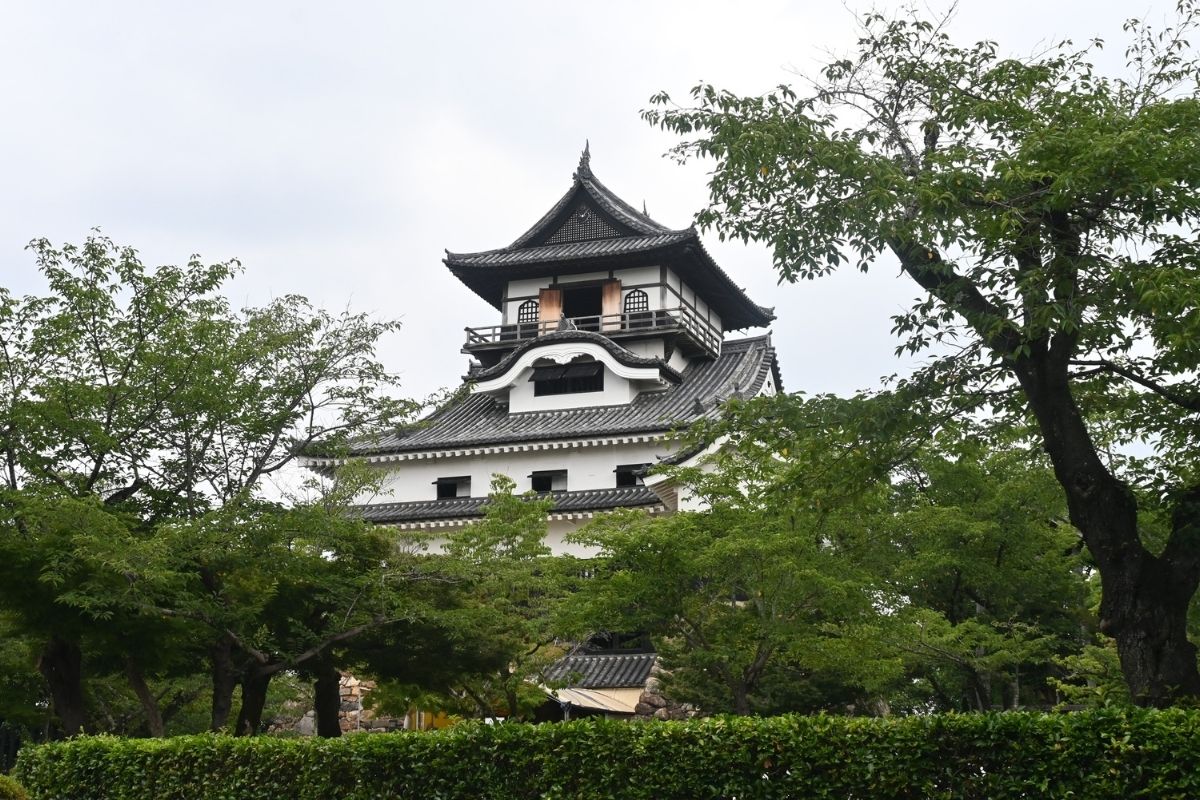
Inuyama is a castle town on the Kiso River, and it holds two National Treasures. One is its castle, among only twelve original keeps still standing in Japan. The other is Jo-an, a tea room built in 1618 by Oda Nobunaga’s younger brother, who studied under Sen no Rikyū and gave up his military life for tea.
You can look at Jo-an. You cannot use it. A few streets away, in a private house, you can.
Three hours, one booking a day
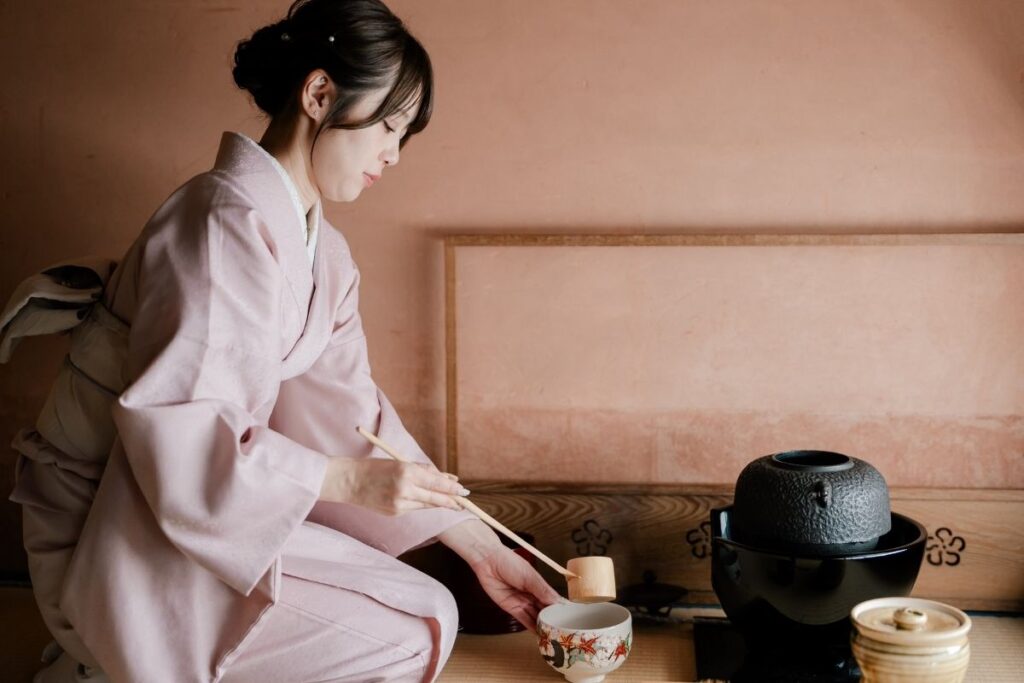
You are fitted into kimono, you sit a proper tea ceremony, and then you eat lunch in a room looking out at the garden. Two to four guests, and only one group is in the house per day.
The ceremony is led by Kameya Sensei, who practises in the Urasenke line — learned from her mother, who learned from a teacher in Kyoto. Ask her how she started and she will tell you she was in middle school and liked the sweets served before the tea. Somewhere in the decades since, the thing she came for stopped being the reason she stayed.
Before anything begins, you choose your own bowl, from kilns close by: Inuyama-yaki from this town, Seto and Tokoname from elsewhere in Aichi. Pick them up first. They are not the same weight and they do not sit in the hand the same way.
Tea has a summary four characters long — 和敬清寂, harmony, respect, purity, tranquillity. Written down it sounds like a poster. In the room it is procedural: the bowl chosen for the season, utensils lifted with two hands, clean things wiped clean again in a fixed order until the room has settled and so have you.
The lunch is not an interval
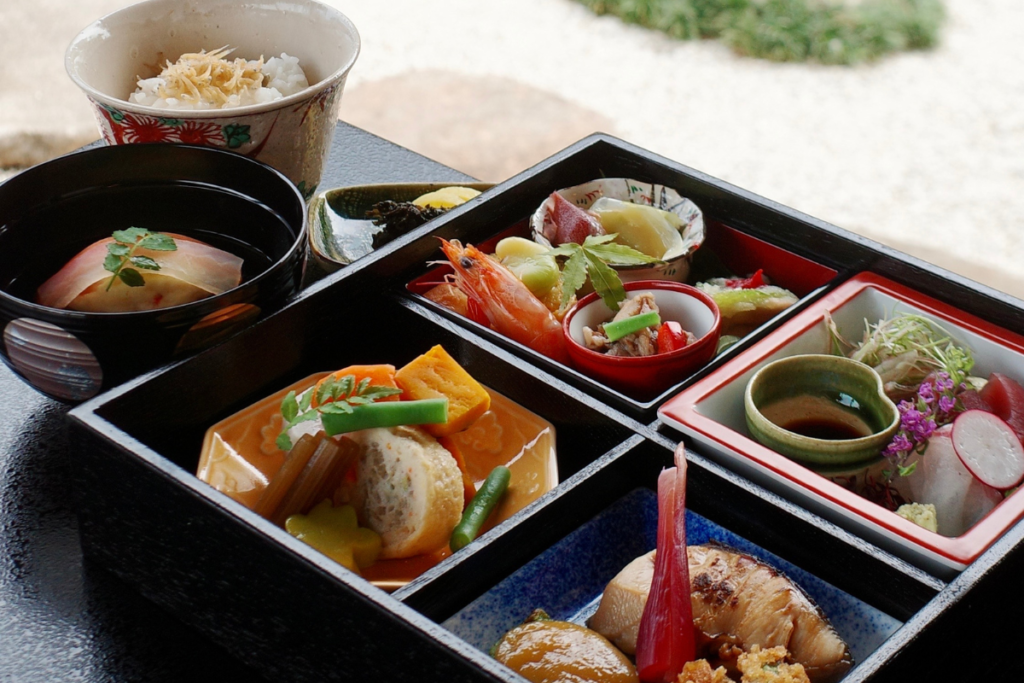
It arrives in a four-compartment box called a shōkadō, named after a seventeenth-century priest who liked the boxes farmers used for seed and repurposed them for tea utensils. Three hundred years later a Kyoto restaurateur borrowed the shape for food. The box belonged to the tea world before it ever held a meal.
Inside is this region: Inuyama tofu with dark Tōkai miso, local konjac, Hida beef from neighbouring Gifu, a fish grilled with nindōshu — a honeysuckle liqueur one family here has made since 1597 — and red miso soup, which is simply what miso tastes like in Aichi. The dishes change with the season, because that is the rule they are cooked by.
The details
Three hours, ¥25,000 per person, two to four guests
Includes kimono rental and fitting, the tea ceremony with seasonal sweets, the shōkadō lunch, and the garden
Basic English guidance on site; a dedicated interpreter is not included
Meeting point: Inuyama Komachi, in the castle town, ten minutes’ walk from the castle
Free cancellation beyond seven days
One note about October
You will read a lot about autumn colour in Japan, and during the Games you are a few weeks early. Inuyama’s maples turn from early November and peak into early December. What October gives you instead is a town that is not busy, weather cool enough to walk in kimono, and a garden you do not have to share.
If you are in Aichi for the Games and have a morning free, we can check a date for you.
Share This Article
Facebook
X
LinkedIn
Ready to experience real Japan?
Private tours, year-round. Tell us what you’re looking for and we’ll build it around you.