Rhojani Francisco
Writer
Table of Contents
On 21 August 2018, Honey J Corporation was registered in Nagoya. On 21 August 2026 — eight years to the day — our team sat down to lunch at Arcoba in Hisaya-odori Park to mark it.
Eight years is not a long time in the travel industry. It is long enough, though, to have built something specific. Honey J today operates three arms of the business under a single Class 1 Travel Agency licence: inbound travel for visitors coming to Japan, outbound travel for Japanese travellers heading overseas, and a dedicated inbound wedding service. Most agencies of our size do one of those. Doing all three from one office in Nagoya means the people planning private experiences are the same people who understand what an international couple needs when they marry in Japan.
What the credentials mean
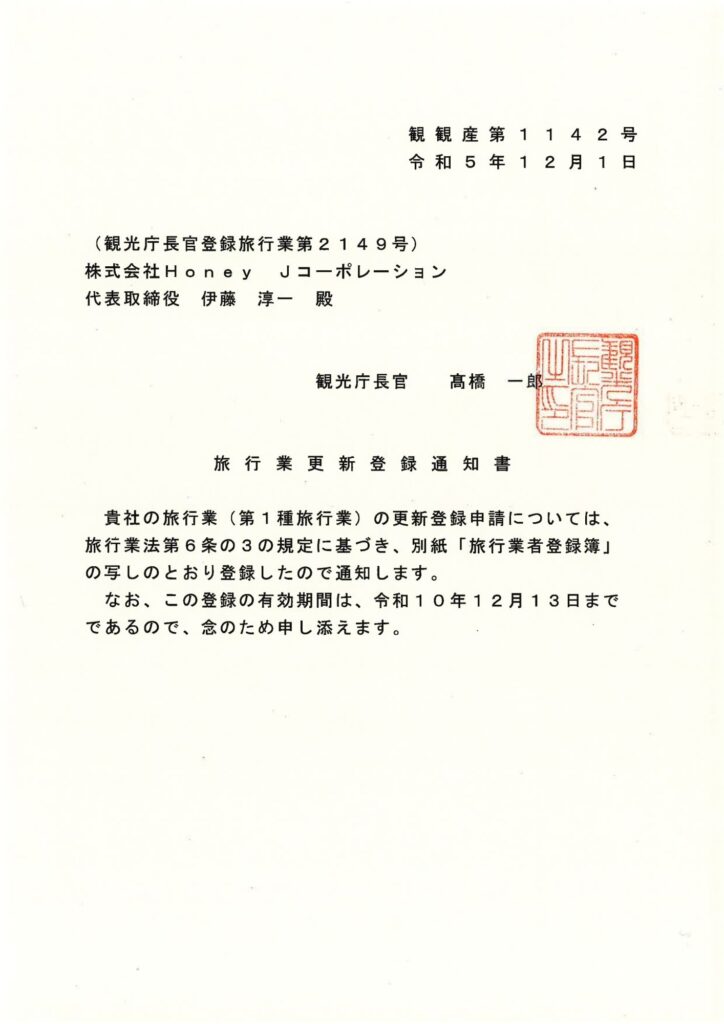
Travel agencies in Japan are registered in tiers under the Travel Agency Act, and the tier tells you a great deal about what a company is permitted to do and what it had to prove to get there.
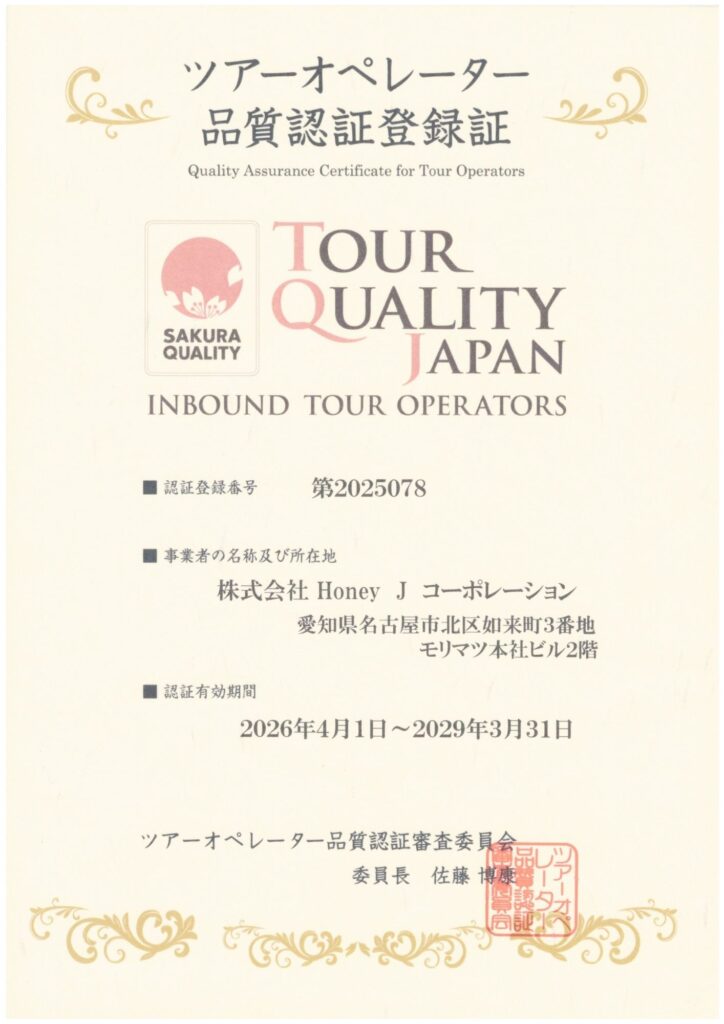
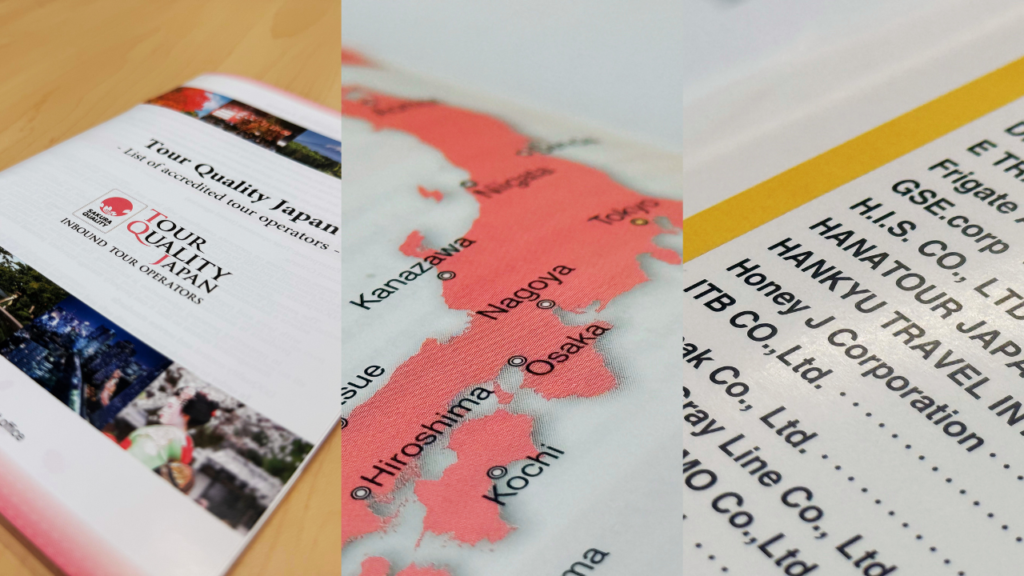
In 2026 we were certified under the Tour Operator Quality Assurance System, certification number 2025-078, valid from 1 April 2026 to 31 March 2029. It is administered by JATA and awarded by an independent Quality Assurance Review Committee, which assesses operators across corporate governance, service quality and corporate social responsibility. Renewal now also requires meeting minimum standards for sustainable tourism drawn from the UNWTO’s global code of tourism ethics. We wrote about what that certification involves in a separate article.
None of this is decorative. For someone booking a trip from the other side of the world, sending money to a company they have never met, these registrations are the difference between an agency that is accountable under Japanese law — with a bond behind it, a renewal cycle, a named regulator and qualified staff — and one that is not.
The people behind it
What is harder to put on a certificate is the mix of people in the room. Honey J’s staff have arrived in Nagoya from the Philippines, from Greece and Germany, from elsewhere in Japan. Between us we work in Japanese, English, Tagalog, Greek and German. Several of us have been the foreigner arriving in Japan without the language, which turns out to be useful training for a job that consists largely of anticipating what a guest will find confusing before they do.
Where we celebrated
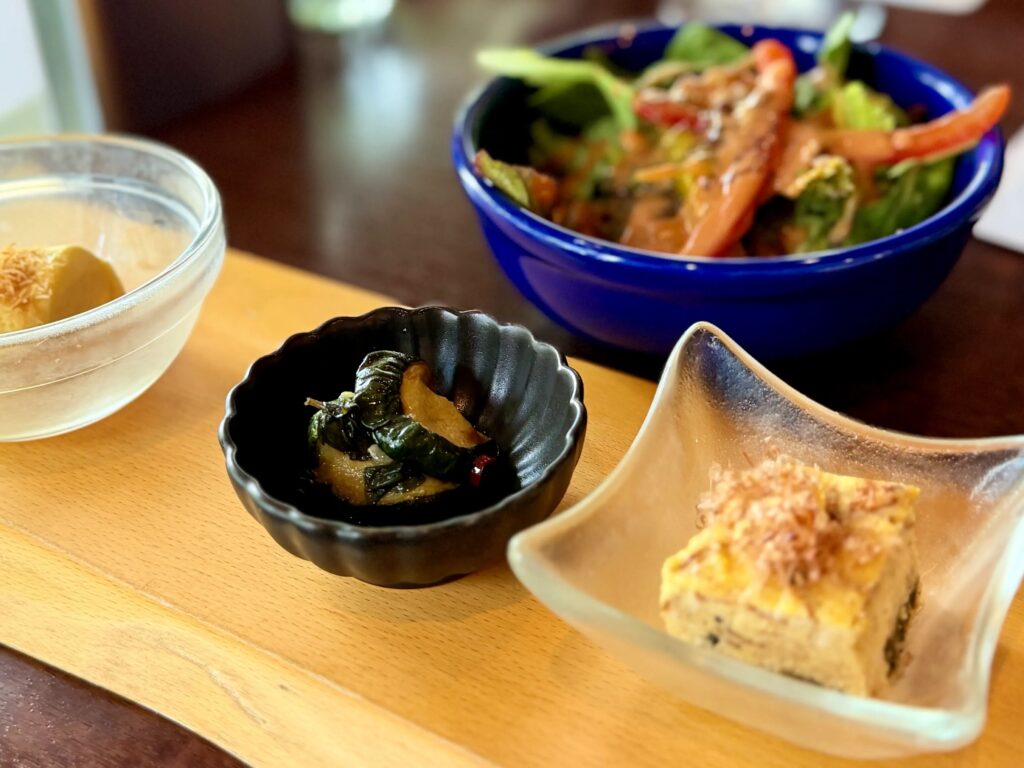
Arcoba was a fitting choice. It sits inside RAYARD Hisaya-odori Park, a freestanding restaurant one minute’s walk from Hisaya-odori Station on the Meijō and Sakura-dōri subway lines, with terraces facing the Chubu Electric Power MIRAI TOWER. Chef Mizutani trained in Kyoto — he rose to head chef at the Italian restaurant Il Ghiottone — before returning to his native Nagoya and opening Arcoba in September 2020. The kitchen’s signature is makiyaki, wood-fired cooking, and the beef that came out of that fire was the dish of the afternoon.
It is the kind of place we would happily send a guest to: central, unhurried, and unmistakably Nagoya rather than a Tokyo import. For anyone spending a day in the city centre, it is a short walk from Sakae and a straight run on the Meijō Line to Nagoya Castle.

Thank you, Lily
The same lunch was a farewell. After close to three years with us, Lily Akari Terada is moving on from her role as Inbound Manager.
Lily came to Honey J from a tax accountant and administrative scrivener office, where she handled international business, tax filings and foreign visa applications — precise, patient work that turned out to be exactly the right training for inbound travel. With roots in both Japan and the Philippines, she works in Japanese, English and Tagalog, and she has spent three years putting all of it to use on behalf of people she mostly never met face to face.
A great deal of what our guests experienced simply as a trip that went smoothly was Lily, quietly making it so — the confirmation that arrived before it was chased, the detail nobody else had thought to check. That kind of work is invisible when it is done well, which is precisely why it deserves saying out loud.
Three years is not long, but she made them count. Thank you, Lily, from all of us. Nagoya will still be here whenever you want to come back.
The next eight
Nagoya’s most visible autumn in years begins in a few weeks. The 20th Asian Games arrive in Aichi-Nagoya in September, putting the city in front of an audience that has spent decades passing through it on the way from Tokyo to Kyoto. We intend to make the most of that, and to still be making the most of it long after the closing ceremony.
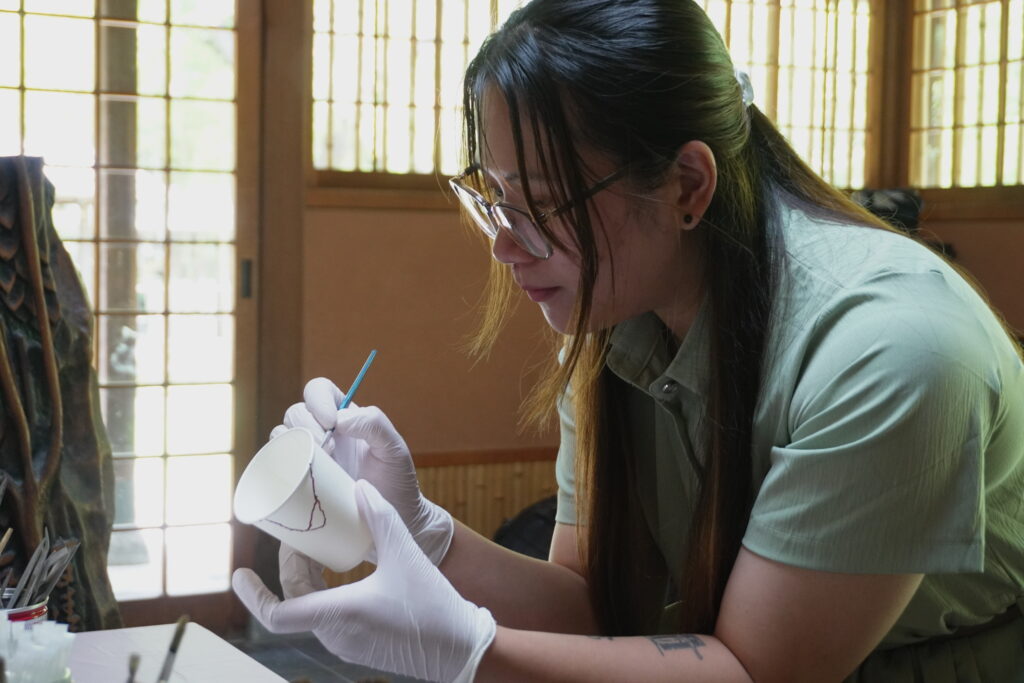
What comes next follows from what is already here. More private experiences with the artisans and craftspeople who live and work in Nagoya and the surrounding region — people whose work deserves a wider audience than a guidebook footnote. A wedding service for couples who want to marry in Japan and be properly looked after while they do. And an inbound operation that treats certification as a standard to keep rather than a hurdle cleared once.
Eight years in, we are more certain of the argument than when we started: that the city most travellers skip is the one worth stopping in. If you have travelled with us already, thank you. If you have not, we would like the next eight years to be when you do.
Share This Article
Ready to experience real Japan?
Private tours, year-round. Tell us what you’re looking for and we’ll build it around you.
旅