NAGOYA · FOOD & CULTURE

Inside a Nagoya Home Kitchen: What You Learn That a Restaurant Can't Teach You

By Rhojani Francisco

Category: Culinary Experience

Reading time: 20 min

The Meijō Line runs in a loop around Nagoya, and if you ride it far enough east you reach a station called Nagoya-Dome-mae Yada. Most people who get off here are going to a baseball game. The Chunichi Dragons play under the dome a five-minute walk from the exit, and on match days the whole neighbourhood turns into a slow river of navy-blue jerseys.

On other days it is simply Higashi Ward: a residential grid of narrow streets, a post office, bicycles parked in front of small apartment buildings, laundry on balconies, an elderly man watering plants in a pot the size of a bucket. There is nothing here that appears on a list of things to see in Nagoya. That is not a failure of the neighbourhood. It is the reason to come.

Somewhere on one of these streets — you are given the exact address once you book, which is the arrangement any of us would want if we were the one opening the door — there is a kitchen where a woman named Yuko Takimoto is soaking a sheet of kelp in cold water and waiting.
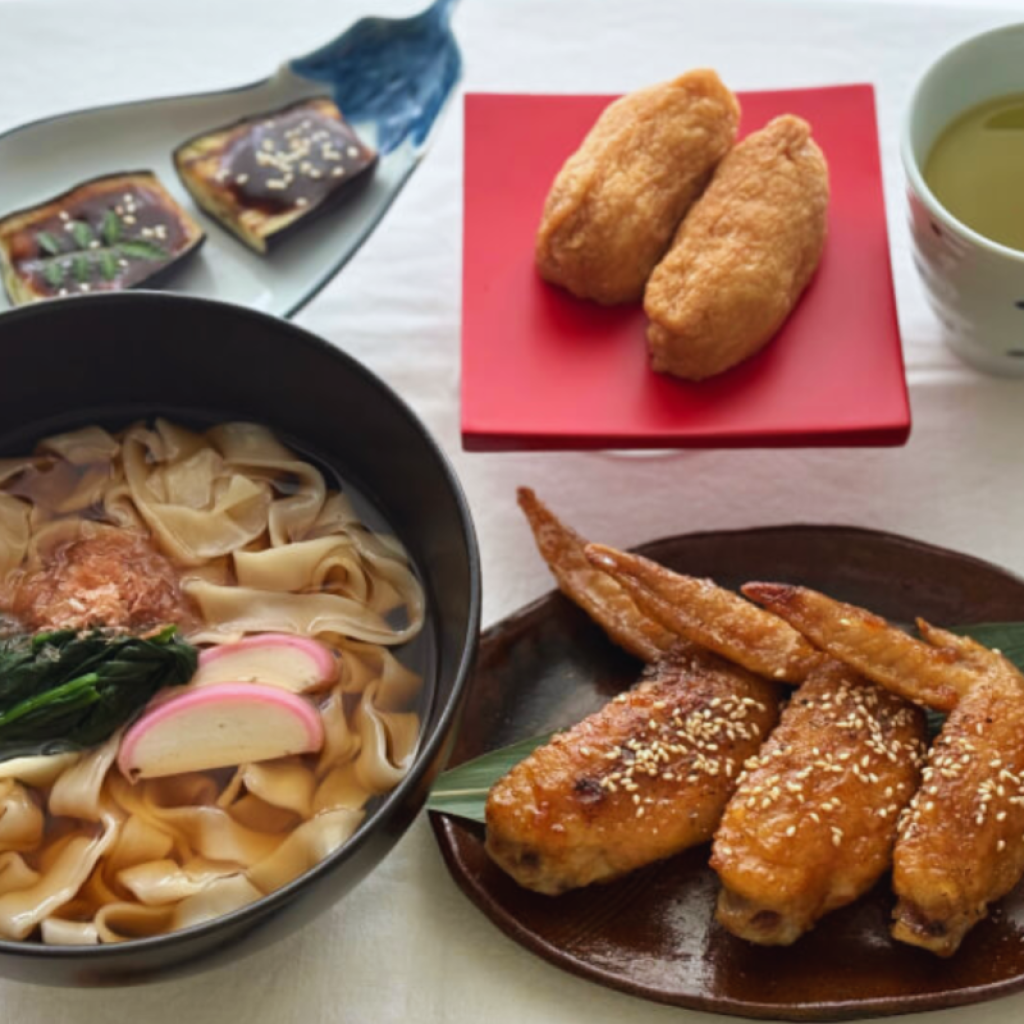
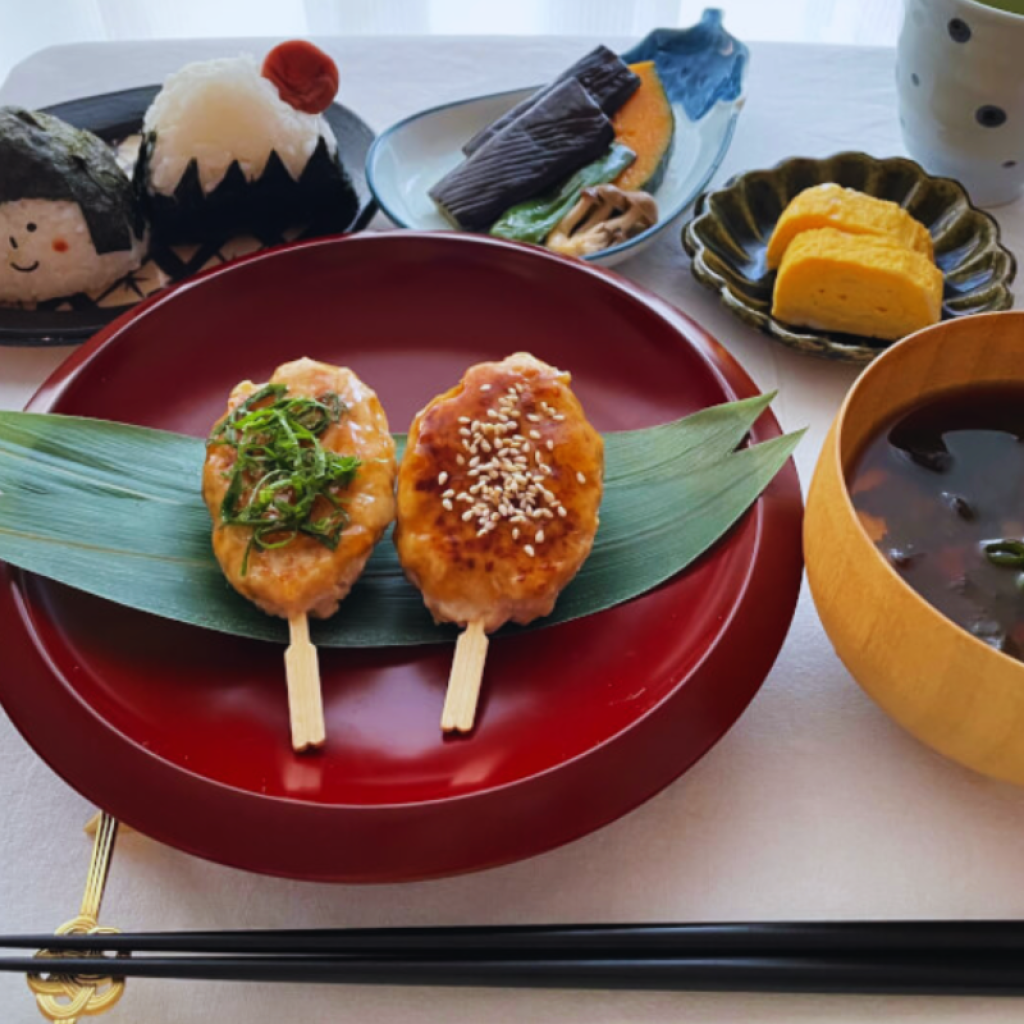
Table of Contents

Why Nagoya rewards travellers who stop

Nagoya’s reputation among international visitors is largely a scheduling reputation. It is the place the Shinkansen passes through at speed, roughly a hundred minutes from Tokyo and forty from Kyoto, and the great majority of people who travel through Aichi Prefecture never leave the platform.

There is a logic to that. Kyoto has thirteen centuries of curated beauty and Tokyo has everything else. Nagoya competes with neither and is not trying to. What Nagoya has instead is a different relationship with the country around it: this is Japan’s manufacturing heart, the prefecture that builds the cars and the machine tools and the aircraft components, a city whose civic self-image is built on making things properly rather than displaying them beautifully. Aichi is also, less famously, one of Japan’s most productive agricultural prefectures — near the top of the national table for cabbage most years, a serious grower of flowers and vegetables, with eel fisheries down on the Mikawa coast and tea fields at Nishio.

The food follows from all of this. Nagoya meshi — the local cuisine — is unglamorous, assertive, and slightly strange to outsiders: chicken wings glazed dark and peppery, flat kishimen noodles, pork cutlet under red miso, eel served three ways in a lacquer tub. It is not delicate. It is the food of a city that works.

Which means Nagoya offers a traveller something the great sightseeing cities structurally cannot. In Kyoto you are watching a culture perform itself, magnificently, for you and several thousand other people. In Nagoya nobody is performing. You are simply somewhere ordinary, in a country where the ordinary is unusually well made. Access to that is harder to arrange than access to a temple — which is precisely why it is worth arranging.

家庭料理 · Home Cooking

The distance between eating Japanese food and understanding it

You can eat extremely well in Nagoya without ever cooking anything. There are eel restaurants near Atsuta Shrine that have been refining a single dish for generations, and standing at a counter watching that happen is a real pleasure.

But a restaurant meal, however fine, is a finished object. It arrives complete. You taste the result of a decision without ever seeing the decision, and one of the quiet frustrations of eating your way through Japan is the sense that something is being withheld — not deliberately, just structurally. The kitchen is behind a wall.

What Japanese people actually eat at home is a different cuisine altogether, and it has a name: katei ryōri, household cooking. It is built on the assumption that you will cook it again tomorrow. There is very little reduction, almost no butter or cream, and the flavour comes from a small set of foundations — dashi, soy sauce, mirin, sake, miso — combined in proportions that shift with the season and with what is cheap and good this week. It is the opposite of a tasting menu. It is designed to be repeatable.

That repeatability is the thing worth travelling for. A meal ends. A method comes home with you.

先生 · Culinary Host

Yuko Takimoto, and why her kitchen is open

Yuko-sensei’s teaching began, as she tells it, a long way from Aichi. She was studying in Canada, cooking Japanese food for friends from a dozen countries in a shared kitchen, and noticed something about what happened when she put a plate of homemade sushi on the table.

“When I was studying in Canada, I often shared homemade Japanese food with my friends from different countries. I realized that food is a wonderful way to connect people across cultures.
Over the years, I came to want to share not only Japanese recipes, but also the warmth of Japanese home cooking and hospitality.
That is why I decided to open my home kitchen to international guests and create an experience where they can cook, eat, and connect with Japanese culture in a more personal way.”

She came back to Nagoya, raised two daughters, and cooked — the ordinary, unrecorded practice of feeding a family every day for years, which is how nearly all Japanese culinary knowledge has actually been transmitted. Very little of it was ever written down. Recipes in Japanese households have historically travelled from a mother’s hands to a daughter’s, adjusted each time for the person doing the adjusting.

Cooking with her daughters is, she says, what shaped how she now teaches strangers.

“Cooking with my daughters has taught me that cooking is not only about learning recipes. It is also about enjoying time together, talking, laughing, and creating memories around the table. That experience has influenced the way I welcome my guests. I want everyone, including children, to feel comfortable and involved, rather than simply watching a cooking demonstration. I hope my guests feel like they are spending time with a Japanese family, not just attending a cooking class.”

Her guests seem to receive it that way. Willy Utoyo, who cooked here recently, put the distinction more bluntly than any marketing copy could: unlike other classes where you sit and watch, he wrote, this one was entirely hands-on, and the evening felt less like a lesson than a family gathering. A visitor from Korea who came with her husband and young child noted that Yuko pitched every explanation at the child’s level and kept encouraging him throughout — which is a small thing to mention and a very difficult thing to do.

Interview conducted online, 21 August 2026.

Twenty minutes with kombu: the lesson that changes how you cook at home

If you take only one thing from an afternoon here, it will probably be dashi, and it will probably surprise you how little is involved.

A sheet of dried kelp goes into cold water and stays there. Not simmering — Japanese cooks are firm about this — because boiling kombu turns the stock cloudy and faintly bitter. It sits, and the water slowly draws out glutamic acid, and the sheet goes from board-stiff to soft and slightly slippery. Then the pot comes just up to heat, the kelp is lifted out, and a handful of katsuobushi — skipjack tuna, smoked, fermented, dried to something like hardwood, then shaved into flakes so thin they curl in air — goes in for a matter of seconds before the whole thing is strained.

That is it. Two ingredients, no fat, no browning, roughly twenty minutes, most of it waiting.

What comes out is the base of almost everything else on a Japanese table. The chemistry behind it was only formally described in 1908, when Kikunae Ikeda at Tokyo Imperial University isolated glutamate from kombu and named the taste umami — but Japanese households had been running the experiment for centuries. The kelp supplies glutamate, the bonito supplies inosinate, and the two together produce a savoury depth far greater than either alone. It is a genuine synergy, and it explains why Japanese home cooking can taste so complete without anything rich in it.

The reason this matters more than a recipe: once you understand dashi, an enormous amount of Japanese food becomes legible. Miso soup stops being a mystery. So does the simmered vegetable dish you ate at a ryokan and could not reverse-engineer. You will make it badly the first time you try at home. You will make it correctly the second time. And you will keep making it, which is more than most souvenirs manage.

UNESCO added washoku to its list of intangible cultural heritage in 2013, and part of what that recognised is exactly this: a food culture transmitted through daily domestic practice rather than through institutions.

発酵 · Fermentation

Aichi's other industry: Fermentation

There is a reason a cooking class in this particular prefecture is not interchangeable with one in Tokyo or Osaka.

Aichi has been a centre of Japanese fermentation since the Edo period. The combination of climate, water and a location on the old trade routes produced a dense concentration of brewers and makers working with Aspergillus oryzae— koji mould — and much of what they made is still made. Tamari soy sauce, thicker and darker than the standard Kanto style. Mirin from the Mikawa area. Vinegar from Handa. And above all, miso.

Most of Japan ferments miso with rice koji, producing something pale gold and comparatively sweet. The old Owari and Mikawa domains — the country that became Aichi — went a different way and made mame-miso: soybeans and salt with no rice at all, inoculated directly, packed into enormous wooden vats, weighted under a carefully stacked pyramid of river stones, and left through two or three summers. What emerges is close to black, dense, faintly bitter, and much less sweet than any miso most visitors have met. It is what makes Nagoya food taste like Nagoya food.

This is the flavour Yuko-sensei most enjoys introducing, and she is candid about why: it startles people.

“One of my favorite Nagoya flavors is miso, especially the rich and deep flavor of local red miso, or mame-miso. I love introducing it to international guests because it is very different from the lighter miso flavors they may have experienced elsewhere in Japan. I enjoy showing them how we use miso in everyday home cooking, not only in miso soup but also in dishes such as miso dengaku and other Nagoya-style dishes.”

Miso dengaku — vegetables or tofu grilled and painted with sweetened red miso — is the dish that usually converts people. The miso caramelises slightly at the edges. It tastes almost like it should be dessert, and isn’t.

Choosing what you'll cook

You choose your menu before you arrive, which is the first sign that this is not a fixed programme. Four options, each teaching something different.


Nagoya Meshi

名古屋メシ

The regional repertoire, built around mame-miso: the local dishes that Nagoya residents themselves usually eat in restaurants rather than cook, because the recipes stayed in the city’s kitchens rather than in its cookbooks. The most useful choice if you have been eating your way around Aichi and want to understand what you have been eating.

Traditional Nagoya home-cooked dishes including local noodle soup and regional specialties served on traditional Japanese tableware.


Ichiju Sansai

一汁三菜

One soup, three dishes — the architecture underneath nearly every Japanese meal since the Edo period. Rice, a soup, a main and two smaller supporting dishes, balanced so that no two share a cooking method or a dominant flavour. You typically make tsukune, tamagoyaki — the rolled omelette that is far harder than it looks and enormously satisfying when it works — and yakibitashi, grilled seasonal vegetables steeped in dashi. This is the choice for anyone who wants a structure they can actually use at home for the rest of their life.

Traditional Japanese Ichiju Sansai meal set featuring grilled miso-glazed rice skewers served on red lacquerware.

寿

Doughnut Sushi

ドーナツ寿司

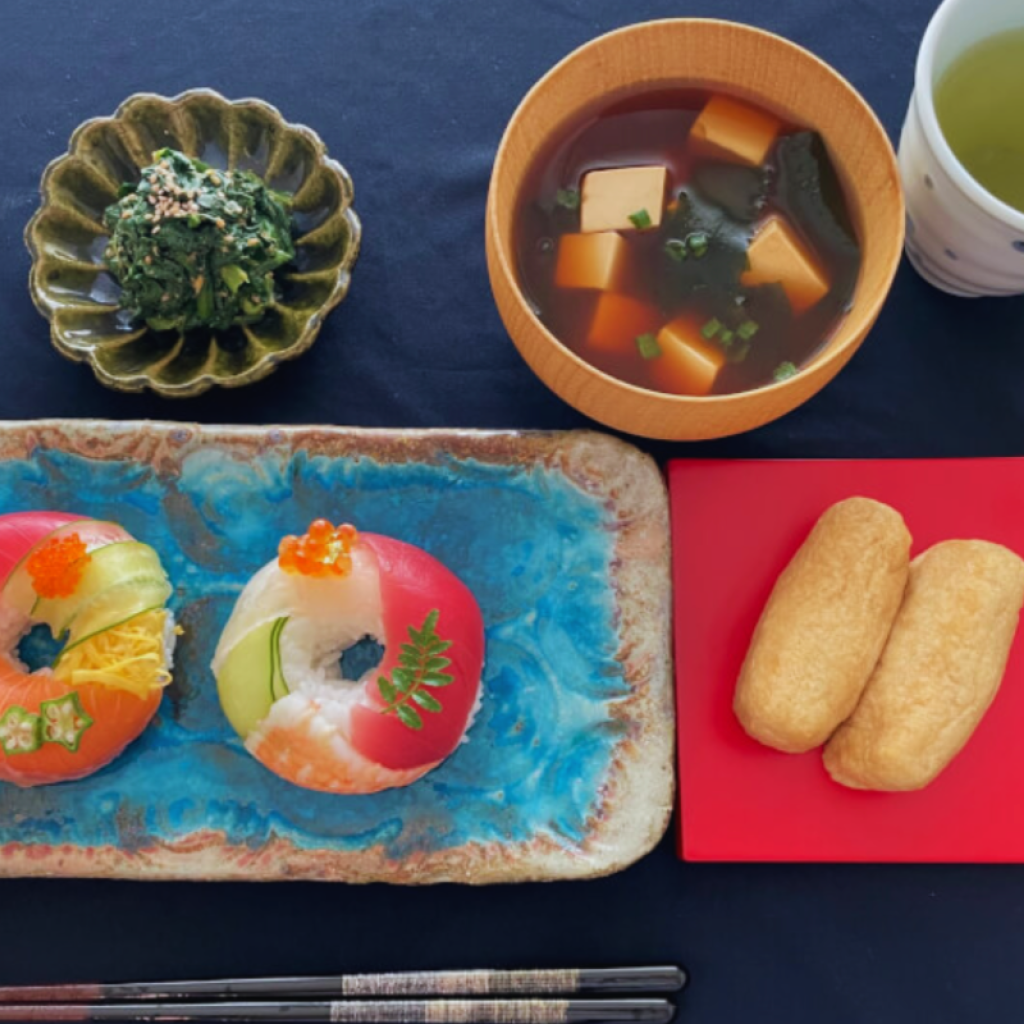
Vinegared rice pressed into rings and topped with seasonal ingredients arranged for the eye as much as the palate. Modern rather than traditional, and unapologetic about it — but it teaches shari, which is the genuinely difficult part of sushi, and it is the reason more than one guest has left saying it was the best thing they made. The obvious choice with teenagers.

Artfully arranged doughnut sushi with colorful seasonal toppings served alongside traditional Japanese side dishes and soup.


Character Bento

キャラ弁

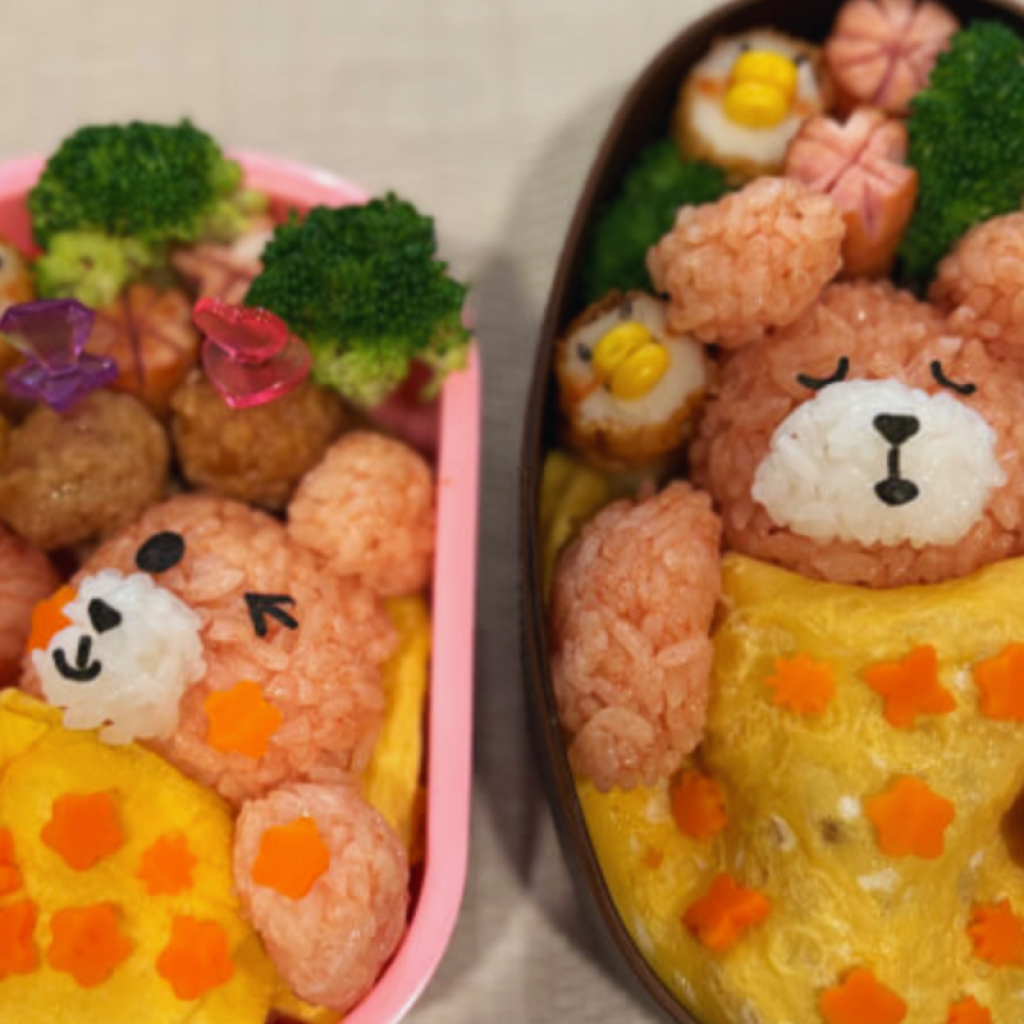
The Japanese lunch box as small sculpture: nori cut with scissors, vegetables trimmed into shapes, rice moulded by hand into a face. Fiddly, absorbing, and — for a family with a child between roughly six and twelve — usually the highlight of the entire trip.

Artfully crafted Japanese character bento lunch box featuring bear-shaped rice and sculpted ingredients prepared in a Nagoya cooking class.

流れ · Flow

How an afternoon in Yada actually unfolds

HOW LONGWHAT HAPPENSWHAT IT'S LIKE
10 minArrival and teaYou come in, take off your shoes, and sit down with seasonal Japanese tea while you talk through what you've chosen and what's good this week.
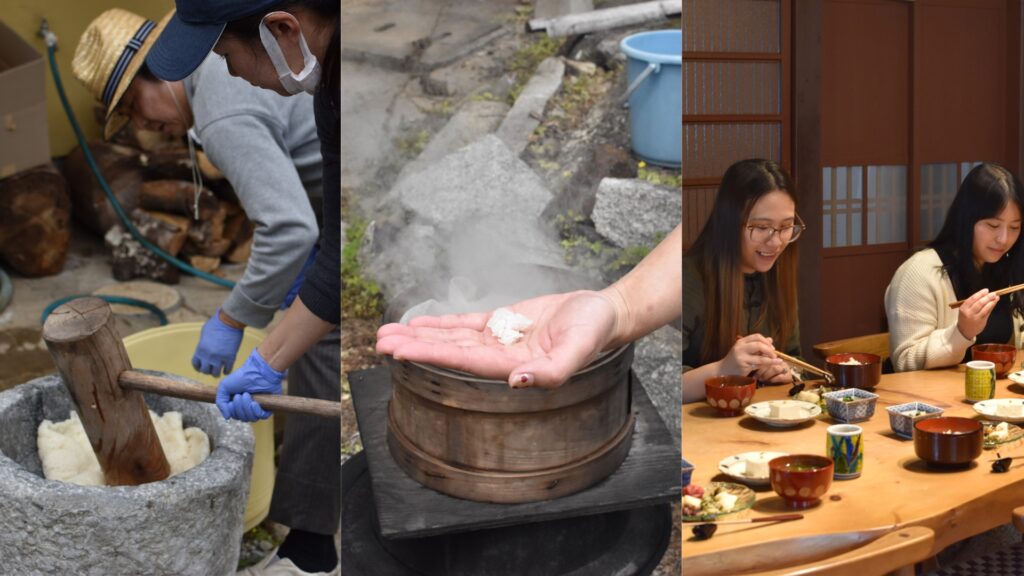
70 minDashi, then cookingKombu into cold water. Then the menu itself, step by step, with your hands on it — cutting, seasoning, rolling, plating. Plating is treated as part of the cooking rather than an afterthought; me de tanoshimu, enjoying with the eyes, is a stage of the work.
40 minEating togetherEveryone sits down and eats what has been made. This is where the conversation happens — about Nagoya, about the neighbourhood, about what your children eat at home and what hers did.
20 minSomething sweetA seasonal Japanese dessert, made together and eaten immediately.
10 minRecipes and photographsYou leave with written recipes for what you made, and photographs from the afternoon.
Included: Private instruction, all ingredients, seasonal tea, use of an apron and hand towel, and a small parting gift.

What changes when it's someone's home

The practical differences are obvious enough. There is no other group. Nobody is queuing for the stove. The pace is set by how quickly you are actually working rather than by a timetable, and if you want to stop and ask why the knife goes at that angle, the answer takes as long as it takes.

The less obvious difference is what a home contains that a studio does not. A studio is a neutral room. A house is full of evidence — the particular pan that gets used for everything, the rice cooker, the way the plates are stacked, the small differences between how a Japanese kitchen is organised and how yours is. You are not being shown Japanese domestic life. You are simply in it, and noticing.

It also changes the direction of the exchange. In a commercial class you are a customer. In someone’s kitchen you are a guest, and guests are asked questions as well as answering them. Several of Yuko-sensei’s visitors describe leaving with as much information about her family as about the food. That asymmetry — the fact that she is curious about you too — is the part that cannot be manufactured, and it is the reason people write about this class the way they do.

There is a corresponding responsibility, which is worth naming honestly: you are in a family’s house. The address arrives after you book, not before. The expectation of ordinary courtesy is a little higher than it would be in a rented studio. Most travellers find this makes the afternoon better rather than more effortful.

Who this suits, and who it doesn't

It suits couples, and it suits them unusually well — cooking together for two and a half hours is a far better conversation than sitting opposite each other in a restaurant.

It suits families with children old enough to hold a knife under supervision, and the character bento and doughnut sushi tracks exist largely for them. 

It suits repeat visitors to Japan, who have generally exhausted the sightseeing and are looking for something with a person in it.

It suits travellers who cook at home and want a method rather than a photograph.

It might not be the right choice for everyone. If you want to be cooked for rather than to cook, book a restaurant — this is entirely hands-on, which is its point and also its cost. If you are looking for professional-level knife instruction or kaiseki technique, this is domestic cooking and does not pretend otherwise. If your Japan trip is already tightly scheduled, this needs a genuine half-day including travel, and compressing it defeats the object. And if you have complex dietary requirements, the honest answer is that Japanese home cooking rests on dashi and soy, and some adaptations are straightforward while others are not — so raise it before you book rather than on the day.

感想 · Guest voices

What people say after the visit

SEOYEON & FAMILY

“We had a wonderful cooking class experience in Nagoya. I booked this class because it offered exactly the dishes I wanted to learn, and it turned out to be even better than expected. Yuko-sensei was so kind and thoughtful. Since we joined with our child, I really appreciated how she explained everything at my child’s level and kept encouraging them throughout the class. Thanks to her, my child enjoyed the experience so much. My husband and I also had a great time cooking together, and the food was absolutely delicious. From start to finish, the class was warm, fun, and very well organized—a lovely family experience that I would highly recommend!”

WILLY UTOYO

“I had an incredible time learning authentic Nagoya home cooking! Unlike other classes where you just watch and sit, this was completely hands-on, which made a huge difference. Yuko-san and her family were so welcoming that the evening felt more like a warm family gathering than a formal lesson. If you want to experience the true heart of Nagoya’s food culture beyond just sitting in a restaurant, this is the perfect way to do it. I will definitely be making that tebasaki when I get back home!”

EKA FROM UNITED STATES

“We really enjoyed the cooking workshop with Yuko-sensei! She answered all our questions, gave us a lot of helpful tips, and of course taught us how to make a delicious meal! We will cook these dishes at home now and will always remember our wonderful time in Nagoya.”

予約 · Booking

Book a session with Yuko Sensei

2 Guests

Pair Plan

¥24,000

A private session for two. Your chosen menu, all ingredients, seasonal tea, and the recipes to take home.

4 Guests

Family & Group Plan

¥48,000

The same session for a family or small group. Menus can be split if people want to cook different things.

Dietary requirements or a specific date

Get in touch before booking if you have dietary needs, want a particular dish, or are travelling on dates that aren’t showing.

よくある質問 · Before you book

Frequently asked questions

It depends what you want from it. If you want a good meal, Nagoya’s restaurants can serve you. If you want to understand what you have been eating, meet someone who lives here, and take home a method you will use — then two and a half hours is a small price. It is the difference between visiting a place and spending an afternoon in it.

How to make dashi from kombu and katsuobushi, which underpins most Japanese cooking; how the standard Japanese meal is structured and balanced; how to use miso, mirin, soy and sake in the proportions a household actually uses; and the specific dishes on whichever of the four menus you choose. You leave with written recipes.

In a private home in Higashi Ward, Nagoya. You meet at Nagoya Yada Post Office, a three-minute walk from Nagoya-Dome-mae Yada Station on the Meijō subway line — roughly twenty minutes from Nagoya Station, or fifteen from Sakae. The exact address is sent once your booking is confirmed, which is the arrangement any of us would want if it were our front door.

Every session is private. Your booking is not combined with other guests; the group is one to five people who all came together.

Substantially. Restaurant cooking in Japan tends toward specialisation — refining a single form over years. Home cooking, katei ryōri, is seasonal, varied, low in fat, built around one soup and several small dishes, and designed to be cooked again tomorrow. Most visitors to Japan never encounter it, because it exists almost entirely behind private doors.

Nagoya meshi: hitsumabushi (grilled eel over rice, eaten three ways), miso katsu, tebasaki chicken wings, kishimen flat noodles, tenmusu rice balls with shrimp tempura, and miso nikomi udon. The common thread is the local mame-miso — a dark, salty, rice-free red miso quite unlike the pale miso found elsewhere in Japan.

No experience needed — Yuko teaches from the beginning and adjusts to whoever is in the room. Sessions are conducted in English. 

Year-round · Private / Shared

Available whenever you are ready

Availability is limited. Enquire to check your preferred dates — we typically respond within 24 hours.