Edgin Ticzon
Writer
Table of Contents
An invitation before the doors open
There is a particular kind of quiet that belongs to a room that has just been finished but has not yet been used. The tatami is still sharp at the edges. The scent of new igusa rush is unmistakable. Nothing has been worn down by anyone yet.
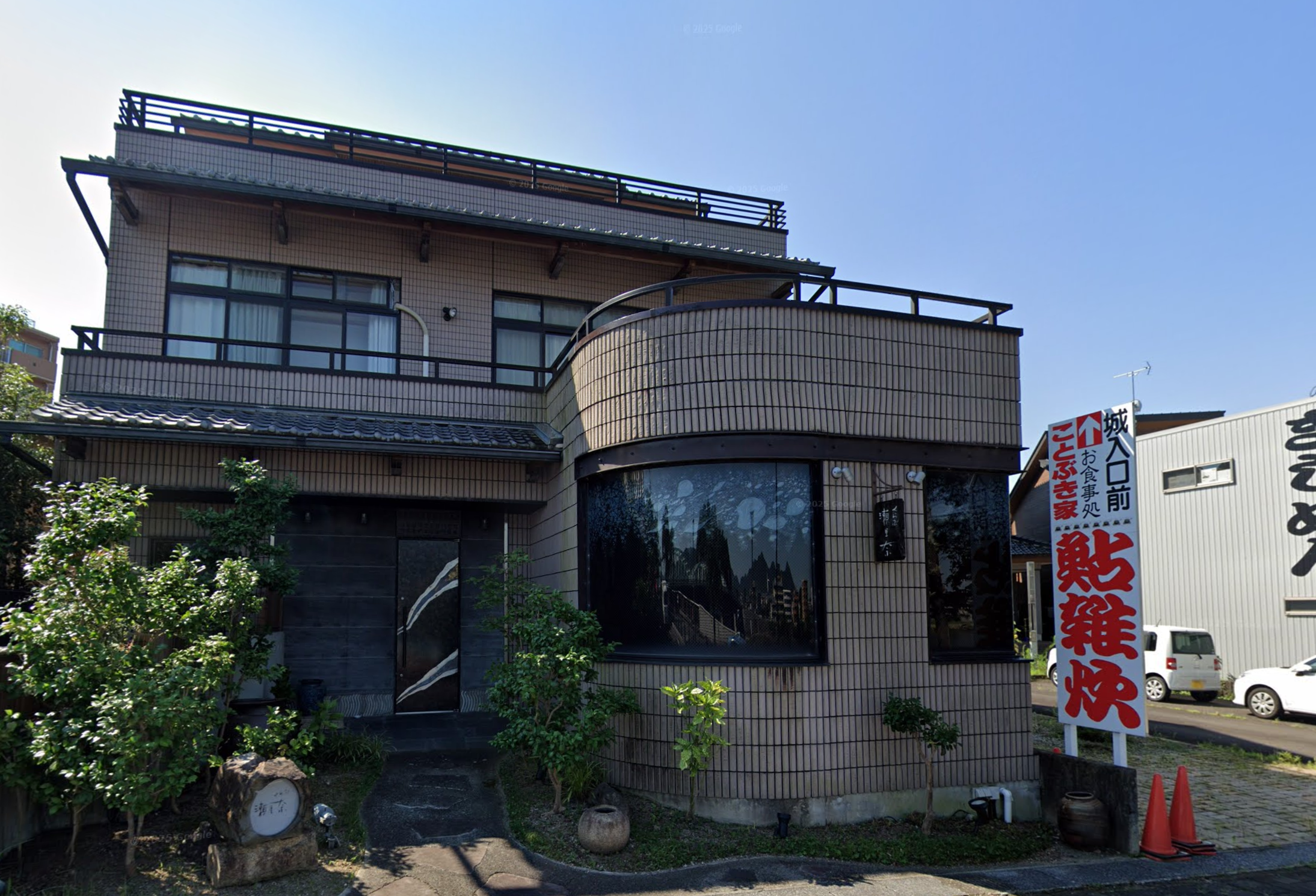
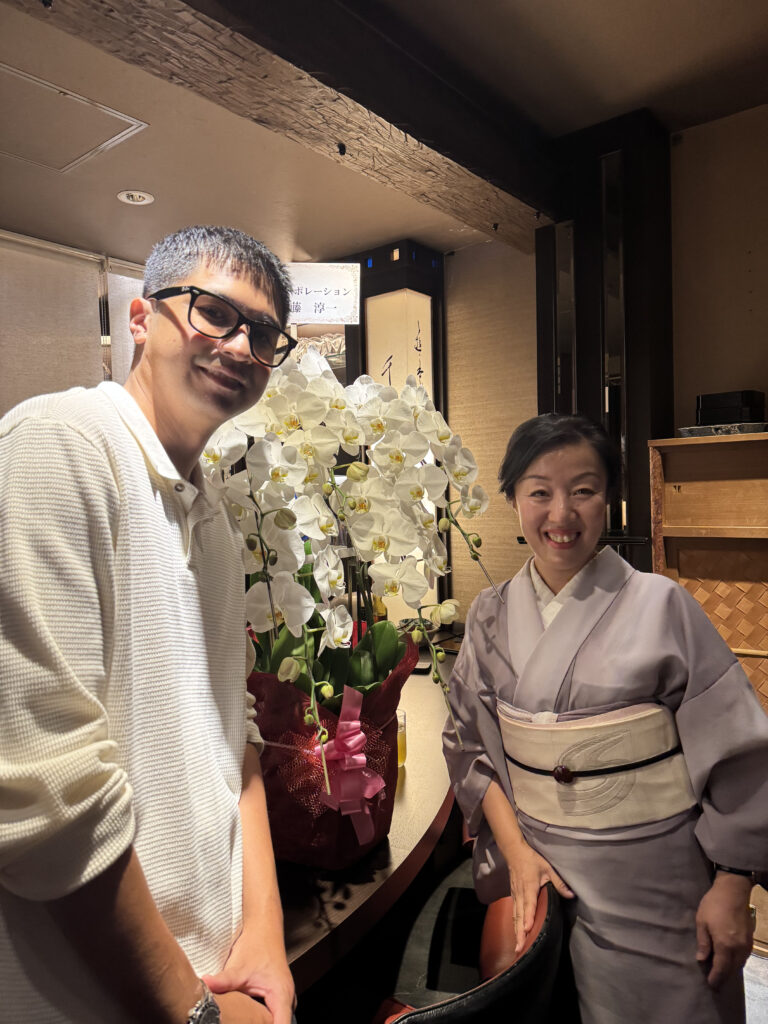
That was the room we stepped into last week at Serina (瀬里奈), a new venue in Inuyama, Aichi — a project by one of the partners in our network of wabunka practitioners across Japan. Wabunka (和文化) is the Japanese term for traditional Japanese culture taken as a whole: tea ceremony, calligraphy, ceramics, textiles, martial arts, food culture, and the aesthetics that connect them. It is not a single art. It is the grammar underneath all of them.
The owner invited a small group of us in ahead of the public opening, and her reason was straightforward: she wanted the space to work for international visitors from the first day, not as an adjustment made two years later.
That intention is rarer than it should be, which is why we are writing about it.
Why Inuyama, and why now
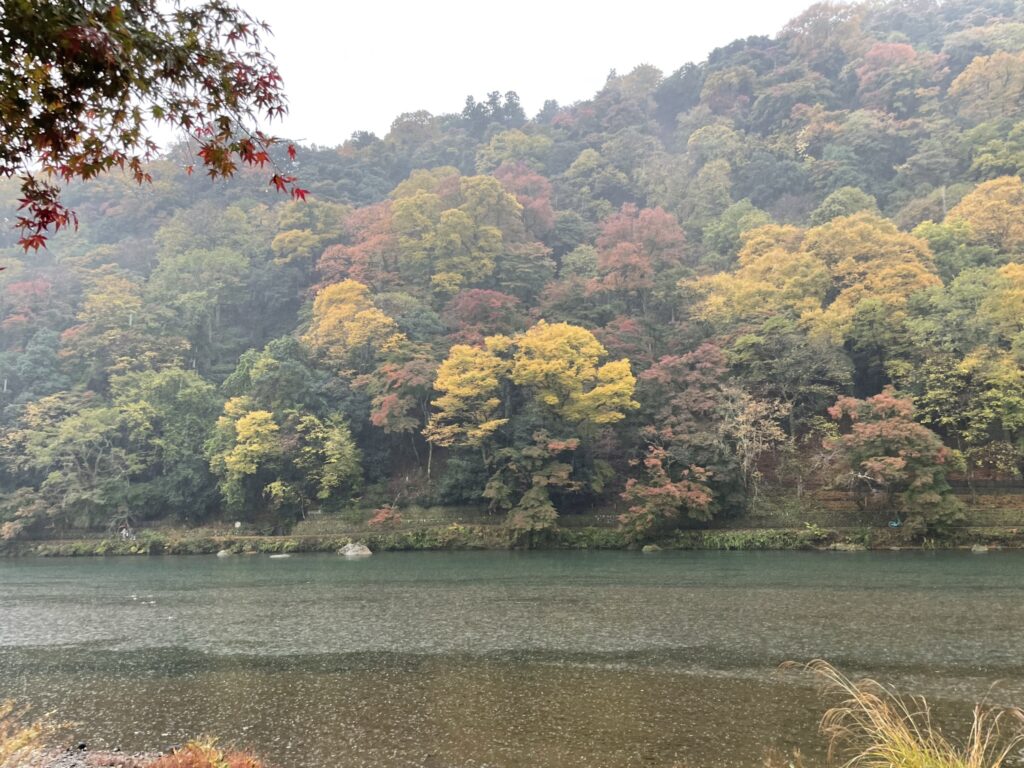
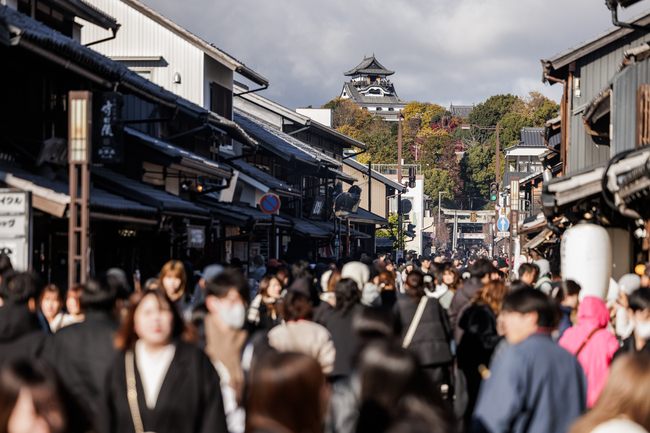
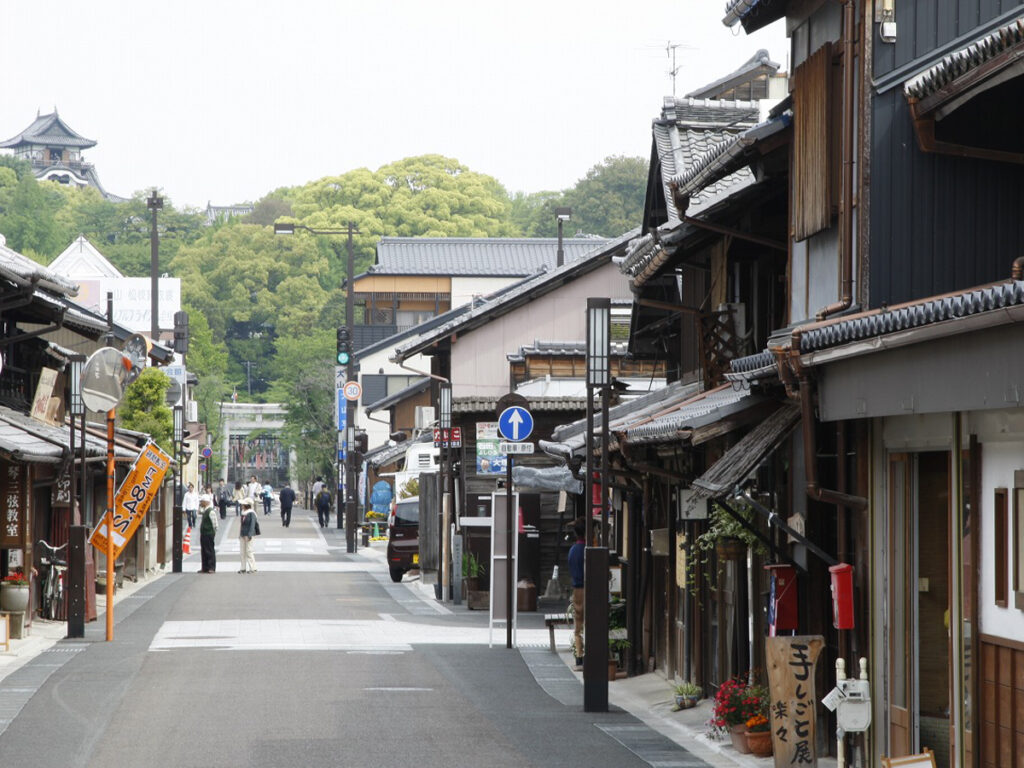
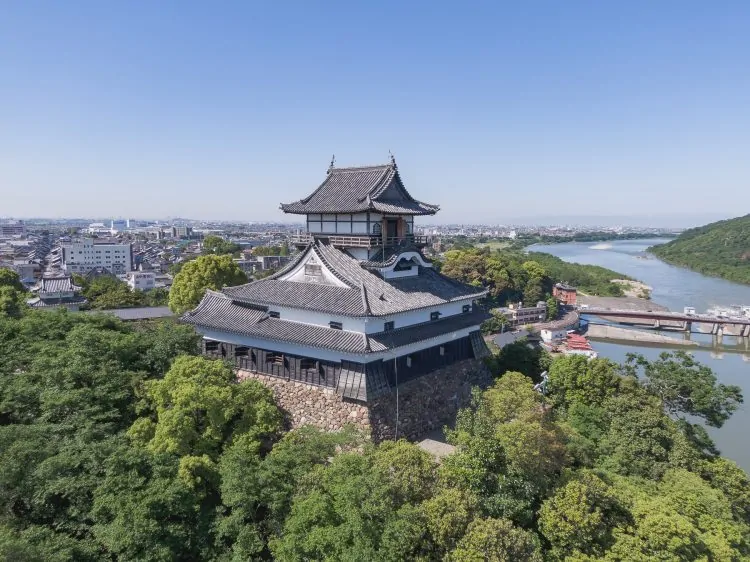
If you have not been, Inuyama sits about 30 minutes north of Nagoya by Meitetsu train, on the Kiso River where Aichi meets Gifu. Its castle keep is one of only twelve original keeps still standing in Japan and one of five designated National Treasures. Below it runs a castle town of wooden machiya buildings, skewer shops and shrines. Serina stands a short walk from it, on the river path, with the water in front and the castle up to the left.
For years this was a quiet domestic destination. That has changed quickly. In a NAVITIME analysis of inbound traveller movement over the winter of 2023–24, Inuyama recorded the steepest growth in international visitor stays of anywhere in Japan — roughly four times the previous year — ahead of ski resorts and hot spring towns. Visitors from Hong Kong and Taiwan were especially prominent, and most arrived as part of the Shoryudo route: in via Chubu Centrair, Haneda or Kansai, a stop in Inuyama, then north to Takayama and Shirakawa-go.
That growth raises an obvious question. Travellers are arriving in far greater numbers — but what is there for them to do beyond walking the main street and photographing the keep? Local operators have raised concerns about congestion in the castle town, and about visitors passing through in three hours without staying, eating or spending.
This is precisely the gap Serina is aiming at.
The raised tatami room: a real tea ceremony, not a photo opportunity
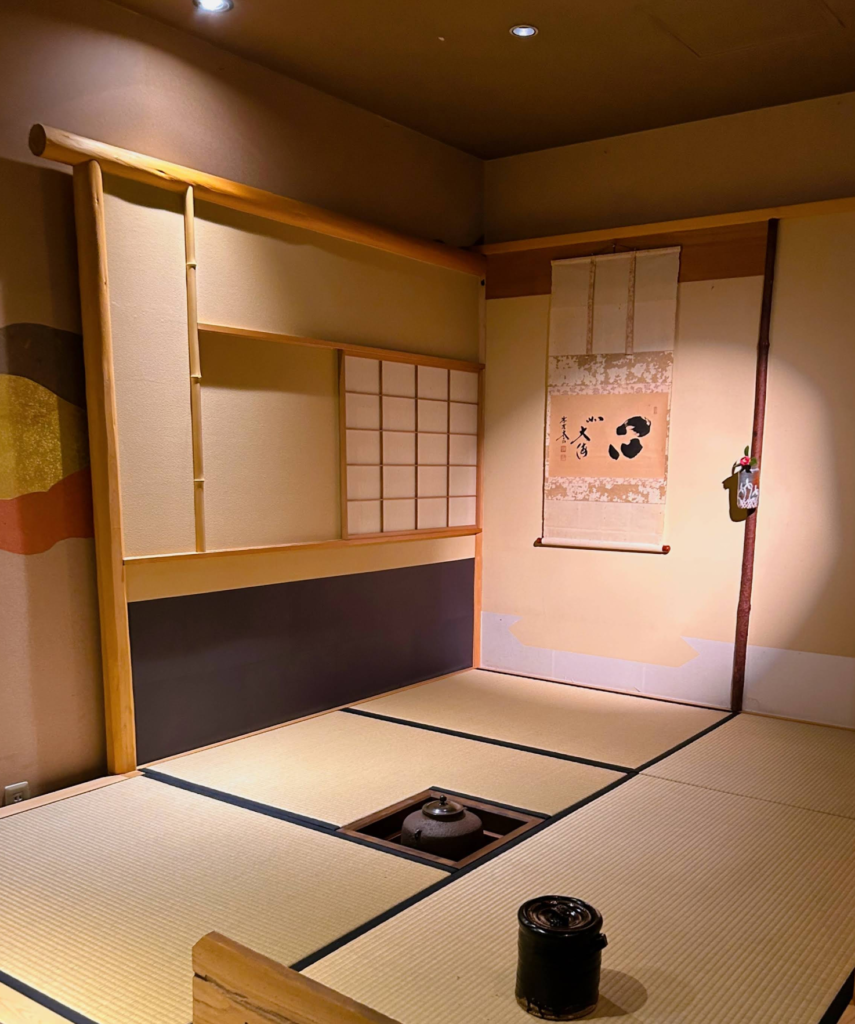
The centrepiece of the building is a raised tatami platform — a tatami-age section lifted above the floor level of the main room. Guests step up out of the everyday part of the space and into something deliberately set apart from it. It is a small architectural gesture that does a great deal of work: the change in height signals a change in register, the way a threshold does at a temple gate.
On that platform, Serina hosts full sado (茶道) tea ceremony sessions — not an abbreviated matcha-whisking demonstration, but the sequence as it is actually practised: the preparation, the utensils, the order of movements, the sweet before the tea, the pause.
We have written before about how much of the tea ceremony’s meaning lives in what looks, to an outside eye, like nothing happening at all. The folding of the fukusa cloth. The rotation of the bowl before drinking. Guests who are told why a movement exists describe the experience completely differently afterwards from those who simply watched it happen. English support at Serina is being built with that in mind.
The jubako bento: much of Japan in one box
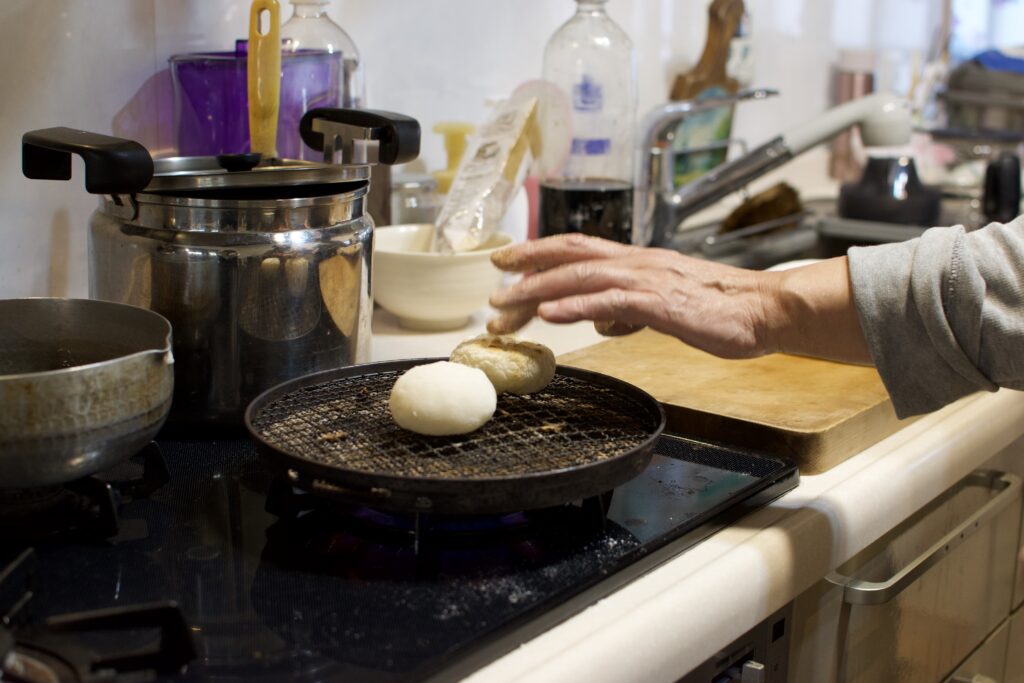
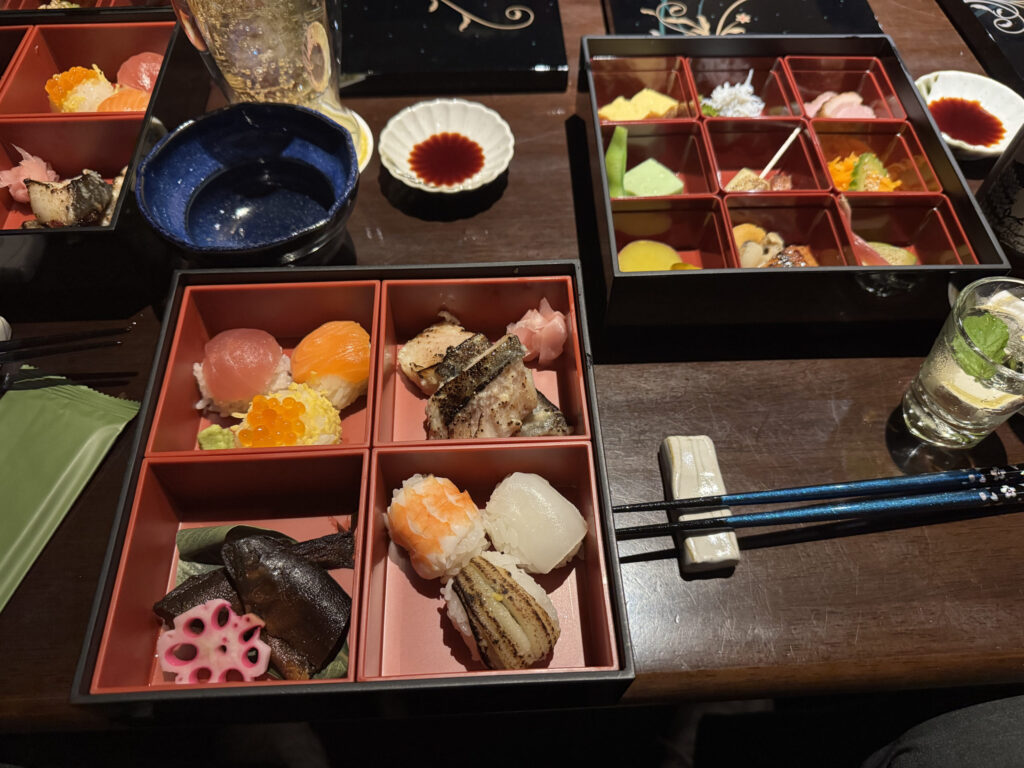
The second thing served in that room is lunch — specifically, a jubako (重箱) bento: a stacked, lacquered box divided into compartments, each holding something different.
We would gently argue that the bento is one of the most underrated cultural objects in Japan, and one of the best suited to international visitors. Four reasons.
You taste many things instead of one.
A traveller with five days in Japan and fifteen meals cannot work through the range of Japanese cooking one dish at a time. A jubako solves this arithmetically. Simmered vegetables, grilled fish, tamagoyaki, pickles, a seasonal garnish, rice — eight or ten preparations in a single sitting, each in its own compartment, each tasted on its own terms.
It is made to be looked at.
The bento is a composition before it is a meal: colour balance, seasonal motifs, the geometry of the dividers, the lacquer of the box itself. Guests photograph it, but more importantly they understand something from it — that the care taken over arrangement is not decoration, it is the point. That same principle runs through the tea ceremony performed in the same room.
It travels.
A bento is portable by design. Eaten on the tatami, carried out to the riverbank, taken up toward the castle, or opened on a train seat — the format holds. For a visitor on a tight itinerary, a meal that does not require ninety minutes in a restaurant is genuinely valuable.
It accommodates.
Compartments make dietary requests far easier to handle than a single plated meal does. Vegetarian, no fish, no alcohol used in cooking — these can be built into the box rather than negotiated out of it. For inbound operators, that matters more every year.
Jazz in a tatami room
Then there is the part of the plan we did not expect.
The owner does not want Serina to be a museum piece open from eleven to three. She talked about evenings — live jazz among them — and about the room working as a place where people gather rather than a place people file through. Tea in the afternoon, a set of standards after dark, in the same room.
If that sounds like a contradiction, it is worth remembering that the tea room has always been a social technology first. It was built for hosting: for putting a small number of people in a considered space and letting something happen between them. Jazz on tatami is less of a departure than it appears. It is the same room doing the same job in a different century.
It is also, frankly, sound business in a town where most visitors currently leave before dinner.
And then, fireworks over the Kiso River
The timing of our visit was not an accident. Inuyama was in the middle of its summer festival.
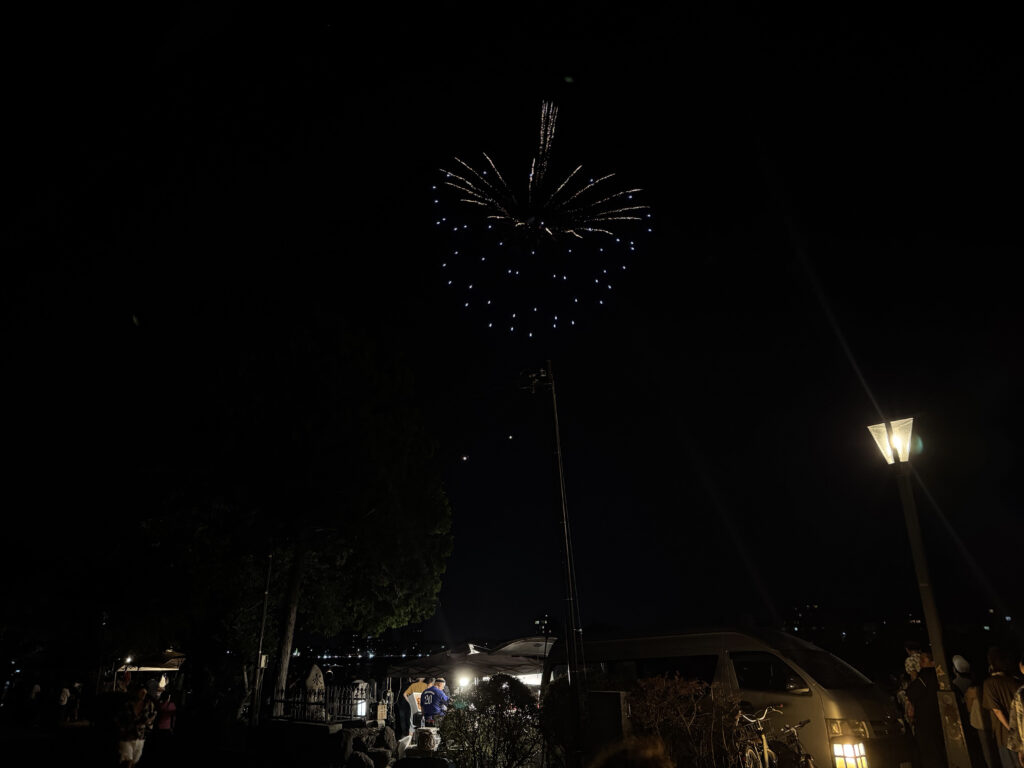
The Nihon Rhine Summer Festival Long-Run Fireworks run for ten consecutive nights at the start of August, on the stretch of the Kiso River that divides Aichi from Gifu. The scale is modest by the standards of Japan’s famous displays — around 300 shells over roughly ten minutes, from eight o’clock — but the staging is unusual, and better for it. The fireworks are launched from small boats on the river itself, and the backdrop is the illuminated keep of Inuyama Castle on the hill above. Ten nights, a different theme each evening, rather than one enormous night that draws a crowd of hundreds of thousands.
For a first-time visitor to Japan, this is arguably the better introduction. The vast summer hanabi taikai in Tokyo and Osaka are extraordinary, but they are also a two-hour immobile crush, and most travellers see them from a great distance with a very large number of strangers. Here you can stand on the river path, eat something from a stall, and watch a National Treasure castle sitting behind the light. There are food stalls and kitchen cars along the riverside during the festival, in the early evening before the launch.
We mention it because it makes the argument for the evening better than we could. The river path outside Serina had people on it after dark — which, in Inuyama, is not the usual state of affairs. A venue that closes at three in the afternoon is closed for every one of those ten nights.
What happens next
We are not publishing opening dates, prices or a booking link here. When Serina is fully open, and when Honey J Tours has an experience live there, it will appear on our experiences page and in this article.
What we can say is why we went. Honey J Tours works as a Cultural Access Company: our job is to find the practitioners, makers and hosts across Japan who are doing the real thing, and to build a bridge between them and travellers who want more than a viewing platform. A great many of those people have never had a foreign guest walk through the door — not because they are unwilling, but because nobody ever built the path.
Occasionally we meet someone who has already decided to build it herself. That is what this visit was.
Share This Article
Ready to experience real Japan?
Private tours, year-round. Tell us what you’re looking for and we’ll build it around you.
旅