-Authentic Experience · Kyoto
Soy Sauce, Miso and Ponzu in a Glass: Kyoto Cocktails from Three Historic Producers
Kyoto cocktails crafted with soy sauce, miso and ponzu, after a private visit to three historic producers near the old Imperial Palace.
Duration
180 min
Group size
2-4 guests
From
¥23,000
Location
Kyoto
Table of Contents
I
場所 · Basho
Kamigyō: The Kitchen Behind the Palace
Most visitors meet Kyoto from the south and east: the station, Gion, Kiyomizu, the long walk up to the temples. The tour starts somewhere else entirely.
Kamigyō is the ward that surrounds the Kyoto Imperial Palace and runs north-west into Nishijin, the old weaving district. Its streets are still lined with latticed machiya townhouses, and with businesses that measure their age in generations rather than years.
All three producers on this tour are in Kamigyō. You meet your guide, Ayumi, outside a convenience store at Karasuma-Imadegawa and walk together to the first stop.
First, Soy Sauce Before It Is Soy Sauce
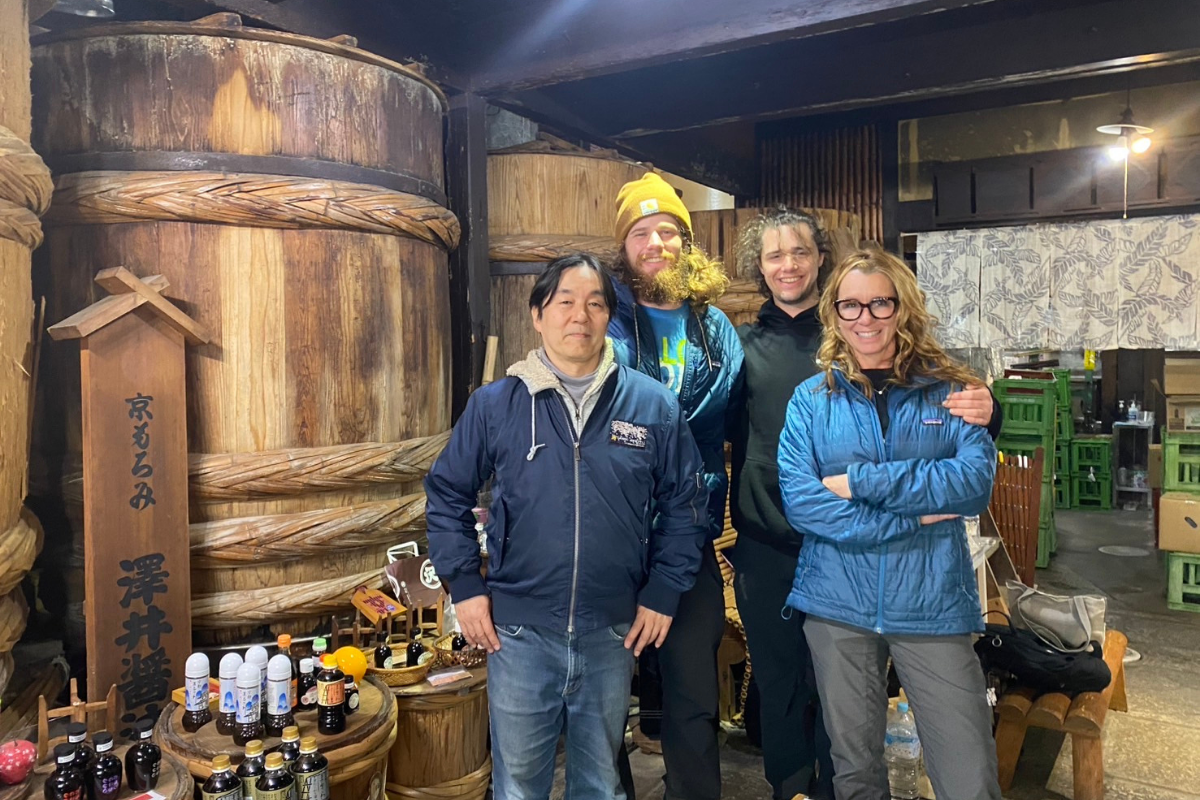
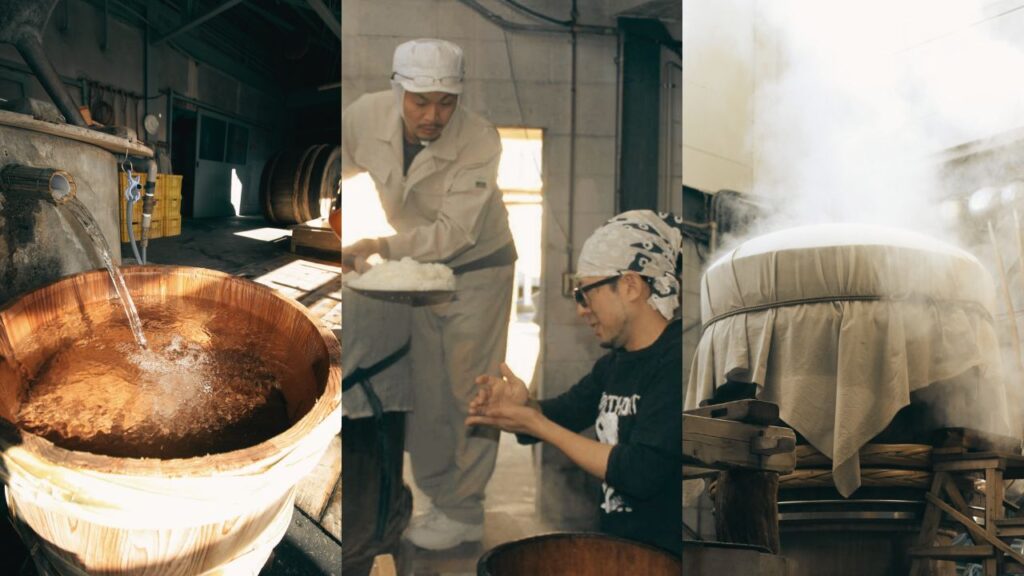
Sawai Shōyu Honten (澤井醤油本店) has brewed soy sauce in Kamigyō since 1879. The shop is a working Kyoto townhouse that doubles as the brewery, and the smell of it reaches the pavement before you reach the door. Inside, wooden barrels and the old tools are still in use. This is a brewery that has chosen to keep doing things the slow way.
Soy sauce starts as moromi (もろみ), a thick mash of soybeans, wheat, kōji mould and brine, left to ferment for months. Only at the end is it pressed, and the liquid that runs out is what arrives on your table.
Here you taste the brewery’s moromi soy sauce, known for its deep, savoury flavour. It is also the first of three ingredients you will meet again, later, in a glass.
Second, the Miso the Court Ate
A short walk west of the palace walls, on Muromachi-dōri, is Honda Miso Honten (本田味噌本店).
In 1830, the first year of the Tenpō era, a man named Tanbaya Mosuke began presenting miso for the Imperial kitchens. He was formerly a sake brewer from Tanba, and was recognised for his skill with kōji. From then until the Meiji Restoration, the house supplied the palace almost exclusively, and only afterwards began selling more widely.
That moment also gave the miso its name. With Edo renamed Tokyo, the “eastern capital”, Kyoto was sometimes called the western one: Saikyō. As a result, Honda called its miso the miso of the western capital, Saikyō miso.
Honda’s signature Saikyō shiro miso is made with roughly twice as much rice kōji as soybean, which gives it a mellow sweetness. At around five percent salt, Honda describes it as among the lowest in salt of any miso. In Kyoto homes, the New Year begins with zōni made with this miso.
On the tour you taste the shop’s premium miso and learn about the craft behind it.
Third, a Ponzu of Your Own
The last producer is in Nishijin, on Shinmachi-dōri just north of Teranouchi.
Kyō-Nishijin Kōtarō no Su (孝太郎の酢), the trading name of Hayashi Kōtarō Zōsu, has been making vinegar for more than 180 years. The family is a branch of an older house that brewed both sake and vinegar, and moved here in the late Edo period. Its street-facing townhouse is now listed by Kyoto City as a Landscape Important Building.
This part of Kamigyō is where the heads of the main tea schools have their households, and it is known for the quality of its groundwater. Kōtarō no Su uses well water and makes its vinegars without additives or chemical seasonings.
Here you create your own ponzu and take the bottle home as a personalised souvenir.II
言葉 · Kotoba
THE WORD: Ponzu, Borrowed From a Glass
It is worth pausing on that etymology, because it explains why the afternoon ends where it does. Pons is one of a number of Japanese words borrowed from Dutch, the language of the only Europeans permitted to trade with Japan for most of the Edo period. The dictionary gives it two meanings: bitter-orange juice, and punch, the mixed drink of spirit, citrus, sugar and spice. In Japanese it was written with the character for vinegar and became ponzu. A ponzu cocktail, then, is not really a novelty. It is the word going home.
What Ponzu Actually Is
Strictly, ponzu is citrus juice sharpened with vinegar. The dark sauce most people know by that name is ponzu shōyu. That is ponzu with soy sauce added, and usually dashi, the stock that underlies much of Japanese cooking.
III
一杯 · Ippai
THE GLASS: Kyoto Cocktails with Soy Sauce, Miso and Ponzu
The tour finishes at a bar, with three signature cocktails available only on this tour. They are crafted with soy sauce, miso and ponzu, the same three ingredients the afternoon has been about.
Balancing a drink with salt and acidity is ordinary bar practice. Between them, soy sauce, miso and ponzu bring both, along with the savoury depth Japanese cooking calls umami.
By the time you reach the bar, you will have tasted soy sauce and miso where they are made, and made a ponzu of your own. The cocktails are not added on to a food tour; they are the conclusion of it.
Why This Is Not a Shop Tasting
You visit the producers on their own premises, houses with roughly 150 to 200 years of history. An English-speaking guide connects the stops. You make something with your own hands and leave with it. And the whole tour is private, your party of two to four and nobody else.
Who This Is For
Food travellers who want to understand Japanese ingredients at the source. Cocktail drinkers curious about what a Japanese bar does with Japanese seasonings. Couples and small groups of friends who prefer a private tour with their own guide.
It suits less well: anyone under 20, since the tour ends with alcohol and 20 is Japan’s legal drinking age; solo travellers, as there is a two-guest minimum; and last-minute planners, since bookings close one week before the date.
Practical Details
Meeting point: In front of FamilyMart Karasuma-Imadegawa, 331 Imadegawa-chō, Kamigyō-ku, Kyoto, a short walk from Imadegawa Station on the Karasuma subway line. Your guide, Ayumi, meets you there and you walk together to the first stop.
Duration: About 3 hours
Group: Private, 2–4 guests
Included: English-speaking guide; soy sauce and miso tastings; ponzu making with a bottle to take home; three signature cocktails
Age: 20 and over
Booking: At least one week in advance
What people say after the visit
ELLIS T. · BYFOOD REVIEW · OCTOBER 2026
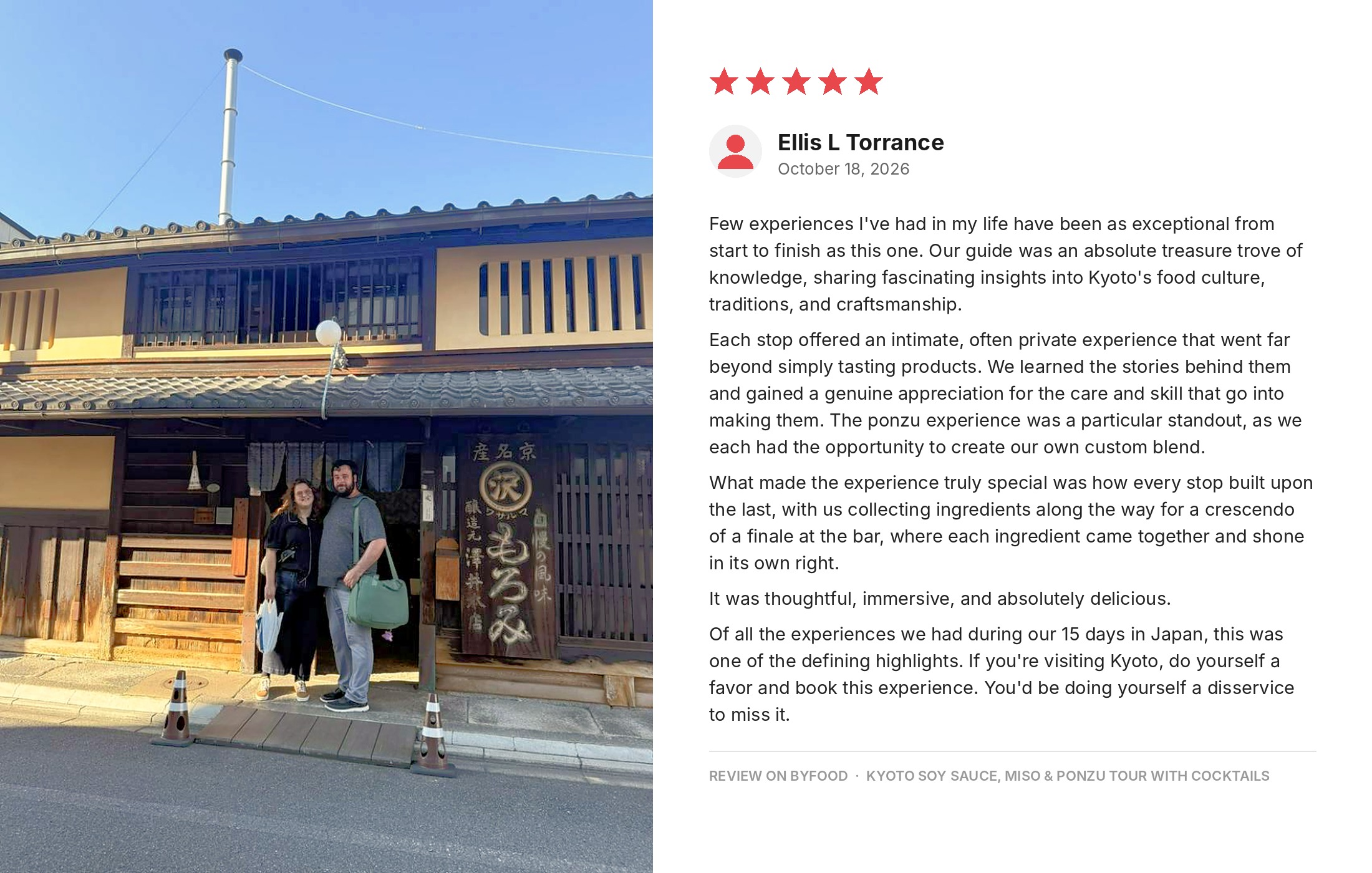
“Few experiences I’ve had in my life have been as exceptional from start to finish as this one… The ponzu experience was a particular standout, as we each had the opportunity to create our own custom blend. What made the experience truly special was how every stop built upon the last, with us collecting ingredients along the way for a crescendo of a finale at the bar… Of all the experiences we had during our 15 days in Japan, this was one of the defining highlights.”
LOLA P. · BYFOOD REVIEW · APRIL 2025
“This was a very unique tour. At first we were a little confused because we started visiting the factories where they made the ponzu and miso and soy which was really cool but then at the end we took ingredients from each place to a nice bar where this really fun bartender made cocktails! It was fun and different – gave us a cool perspective in a part of town we would have never visited! Definitely recommend!”
Book this experience
Three producers, three cocktails
2 GUESTS (MINIMUM)
PAIR
¥72,600
¥36,300 per person
Covers the two-guest minimum. A private three-hour tour with an English-speaking guide: soy sauce and miso tastings, your own ponzu to take home, and three signature cocktails.
3–4 GUESTS
Small group
¥23,000
per person
For families or friends of up to four. The same private tour, with every tasting, the ponzu making and all three cocktails included.
5+ Guests
Larger groups
Enquire
The tour is designed for up to four guests. For larger parties, send us your dates and group size and we will see what can be arranged.
よくある質問 · Before you book
Frequently asked questions
Do I need to know anything about Japanese food or cocktails?
No. The tour is built for first-timers, and your guide explains each ingredient as you taste it.
What is moromi?
The fermented mash of soybeans, wheat, kōji and brine from which soy sauce is pressed.
What is Saikyō miso?
Kyoto’s sweet white miso, made with roughly twice as much rice kōji as soybean. The name means “miso of the western capital” and was given by Honda Miso Honten, which supplied the Imperial Palace from 1830.
What is the difference between ponzu and ponzu shōyu?
Ponzu is citrus juice with vinegar. Ponzu shōyu adds soy sauce and usually dashi.
Can I take my ponzu home on a flight?
It is a liquid, so cabin-baggage liquid limits apply. Check your airline’s rules before you pack it.
Is there a minimum age?
Yes, 20. The tour includes three alcoholic cocktails, and 20 is the legal drinking age in Japan.
Can dietary requirements be accommodated?
The tour includes tastings and alcoholic cocktails. Please raise any requirement when enquiring so we can confirm with each producer in advance.
Is the tour private?
Yes. Each booking is for your party of two to four guests only.
Sources
Details of the experience are drawn from Honey J’s own tour information.
Background on Honda Miso Honten, including its 1830 founding, its supply to the Imperial Palace and the naming of Saikyō miso, is drawn from the company’s own published history. For Sawai Shōyu Honten, we used information from the Kyoto City Tourism Association. Details on Hayashi Kōtarō Zōsu, including its building’s designation, come from Kyoto City’s Landscape Important Building records and the travel publisher Rurubu. The etymology of ponzu follows the Digital Daijisen Japanese dictionary.
Year-round · Private / Shared
Available whenever you are ready
Availability is limited. Enquire to check your preferred dates — we typically respond within 24 hours.