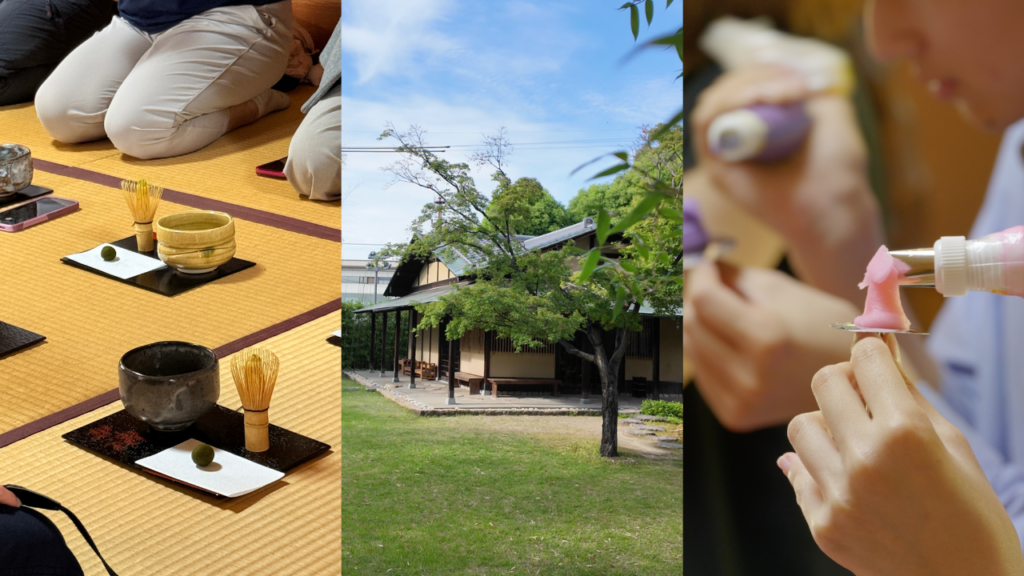
Harmony is not a mood. It is a set of decisions: the bowl chosen for the season, the sweet chosen for the month, the space arranged around the number of people in it. Everything is supposed to agree with everything else, including the weather outside.
By Rhojani Francisco
Category: Craft & Culture
Reading time: 12 min
Somewhere in the middle of this lunch there is a piece of sawara — Spanish mackerel — that has been grilled with nindōshu, a medicinal honeysuckle liqueur that one family in this town has made since 1597, from a method that has never once been written down.
Nobody announces this. It arrives on the plate with everything else.
That is the part visitors tend to miss about Japanese hospitality, and it is the reason this afternoon is worth taking slowly. Omotenashi is usually translated as hospitality, which makes it sound like service. It is closer to something else: the sum of decisions a host made before you got there, none of which you will see being made, most of which you will never be told about.
The bowl your tea is served in was chosen for the season. The fish was chosen because it is spring. The liqueur was chosen because the brewery is three streets away and has been for four centuries.
You are not meant to notice any of this. You are meant to feel that the afternoon fits.