Rhojani Francisco
Writer
Table of Contents
At about half past nine on a September evening, the crowd comes out of Mizuho Park and down toward the subway in a slow, good-tempered river. Half of them are still holding flags. The night air in Nagoya at the end of September has finally lost its edge — high twenties in the afternoon, low twenties by the closing weekend — and the walk to the station is pleasant enough that nobody hurries.
And then everyone gets on a train, and the evening is over.
That is the shape of most people’s Asian Games. Sixteen days in a city, and a set of memories that are entirely made of arenas. It is nobody’s fault. Aichi is not a region that advertises itself, and a spectator with a ticket to judo and a hotel near the station has no particular reason to suspect that the four-hundred-year-old indigo district is twenty minutes down the Meitetsu line, or that a working sake brewery from 1848 sits ten minutes from the hall where the breaking finals are being held.
This is a guide to that other half. Not a list of sights — Nagoya Castle and Atsuta Shrine will find you without help. This is about what is actually within reach of the venue you already have a ticket for, and what you might do with the twenty hours a day you are not watching sport.
The Games, in Brief
The 20th Asian Games Aichi-Nagoya 2026 run from 19 September to 4 October, with the opening ceremony at Paloma Mizuho Stadium — officially Nagoya City Mizuho Park Athletic Stadium — on the evening of the 19th, and the closing ceremony there on the 4th. This is the third time Japan has hosted, after Tokyo in 1958 and Hiroshima in 1994, and the first time in thirty-two years.
Forty-five national Olympic committees are taking part, across 43 sports at 54 competition venues. The motto is Imagine One Asia. The mascot is HONOHON.
Most of the competition sits inside Aichi. Nagoya City holds the largest share — Mizuho Park, the new Aichi International Arena (better known locally as IG Arena) beside Nagoya Castle, the Nagoya City General Gymnasium at Kasugai’s edge, Portmesse Nagoya on the port. Beyond the city, venues run out to Toyota, Okazaki, Toyohashi, Ichinomiya, Kasugai, Anjo, Nisshin, Nishio, Komaki, Inazawa, Tokoname, Gamagori, Tahara and Hekinan. A handful of events sit outside the prefecture entirely: swimming and diving in Tokyo, equestrian in Tokyo, track cycling in Izu, rowing partly in Gifu, football at Nagai Stadium in Osaka.
One detail that catches people out: although the official Games period opens on 19 September, the competition schedule has ticketed events beginning as early as 10 September — nine days before the opening ceremony. If you are building a trip around a specific sport, check the daily schedule rather than the headline dates. The organising committee has also cautioned that session times can move, so it is worth re-checking before booking anything non-refundable.
And after the Games, the 5th Asian Para Games run 18–24 October at the same main stadium — the first time Japan has hosted them.
Everything above is drawn from the official Aichi-Nagoya 2026 site. For schedules, tickets and venue access, go there first: aichi-nagoya2026.org.
Why Aichi Rewards the Extra Days
The organising committee describes Aichi as Japan’s monozukuri capital — its manufacturing heartland — and most visitors will read that as a reference to Toyota, which is fair enough. But the word is older than the car industry and it covers a much stranger inheritance.
Tokoname, on the Chita Peninsula, is one of Japan’s Six Ancient Kilns and has been firing clay for something close to a thousand years. Seto, north-east of the city, gave the Japanese language its everyday word for ceramics — setomono, “Seto things”, the way we might say china. Arimatsu, in Nagoya’s Midori Ward, has been binding and dyeing cloth since the early 1600s. Nishio grows and stone-grinds matcha that Kyoto tea houses buy.
None of this is preserved for tourism. It is a working economy that happens to be four centuries old in places.
Aichi eats differently from the rest of Japan, and it is stubborn about it. The reason is fermentation: the Chita and Handa area produces the dark, long-aged soybean miso — mame-miso, usually sold as hatchō — that gives the region’s cooking its particular depth and colour. It also produced the rice vinegar that made Edo-period sushi possible, which is a claim the region makes fairly quietly for something that changed how the world eats.
What this means at the table is a set of dishes that mostly do not travel: hitsumabushi, eel over rice eaten three ways in sequence; miso katsu; miso nikomi udon, which is stiff, dark and not entirely reasonable; tebasaki, the peppered chicken wings that are the local currency of a night out. The umbrella term is Nagoya meshi, and the organising committee cites it, correctly, as part of what visitors should be welcomed with.
But Nagoya meshi is restaurant food. It is not what the region actually eats at home, and the gap between the two is where the interesting part of Aichi’s food culture lives — which is a reason to spend one evening somewhere other than a restaurant.
The Map Most Visitors Won't Have
Here is the practical version. Find your venue.
Around Nagoya Castle: Sanno-maru, IG Arena and Nishi Ward
If you have basketball or judo tickets, you are going to IG Arena — the 17,000-seat arena that opened in July 2025 directly beside Nagoya Castle. If you have athletics tickets, you may also find yourself in this district for the race walk, which runs a one-kilometre loop through the Sanno-maru government quarter. It is worth understanding what you are looking at while you watch: the athletes pass the Aichi Prefectural Government Main Building and Nagoya City Hall Main Building, both designated Important Cultural Properties of Japan — heavy 1930s stone topped with tiled Japanese roofs, a style that has no real equivalent anywhere else.
Ten minutes west, in Nishi Ward, is a small studio called Koto Chikage, and it is the most useful address in this guide for anyone with an awkward two-hour gap.
Two things happen there. The first is a private ninety-minute calligraphy lesson — a professional calligrapher, an English-speaking assistant, ink, brushes and paper provided, and at the end a piece of your own brushwork. It is the shortest and least expensive cultural booking Honey J holds in Aichi, and for a spectator killing time between a morning and an evening session, it is close to ideal.
The second is a private koto lesson, taught by a professional musician on the thirteen-stringed instrument that most people know from the sound of a Japanese New Year without ever having seen one. The instrument and accessories are provided, the minimum age is six, and — usefully — it is priced per group rather than per person, which makes it unusually good value for a family of four. Bring socks; you will be in a Japanese-style room.
Around Mizuho Park: the evening city
Mizuho Park is the densest cluster in the Games. The main stadium, the rugby field and the park gymnasium are all within walking distance of one another, which makes it the easiest base if you are attending several sessions in a day.
It is also, in the evening, twenty minutes from most of Nagoya.
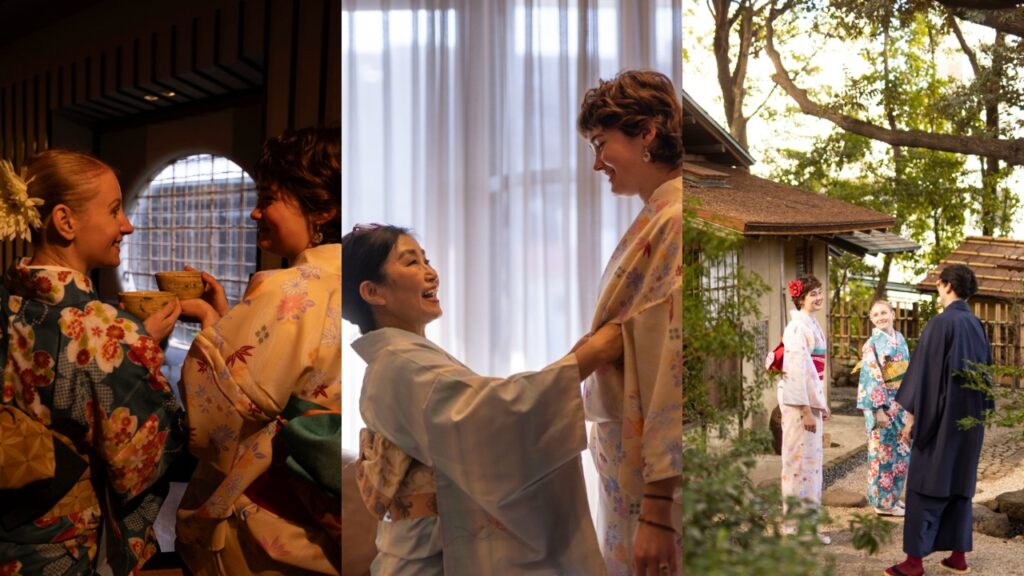
Osu is where you go when you want a neighbourhood rather than a monument. It is a covered arcade district wrapped around a temple, and the mix is genuinely odd — secondhand kimono dealers next to Brazilian food next to electronics next to a shrine. There is an experience here that sounds unlikely and works: a yukata photo session through Osu, which starts at a barbershop in Showa Ward with a traditional Japanese cut for male guests, moves through professional hair and makeup and yukata dressing, and finishes with a guided walk through the arcades for eighty to a hundred edited photographs. Morning, afternoon and evening slots are available, which during the Games matters more than it usually would. Note that the studio staff work in Japanese.
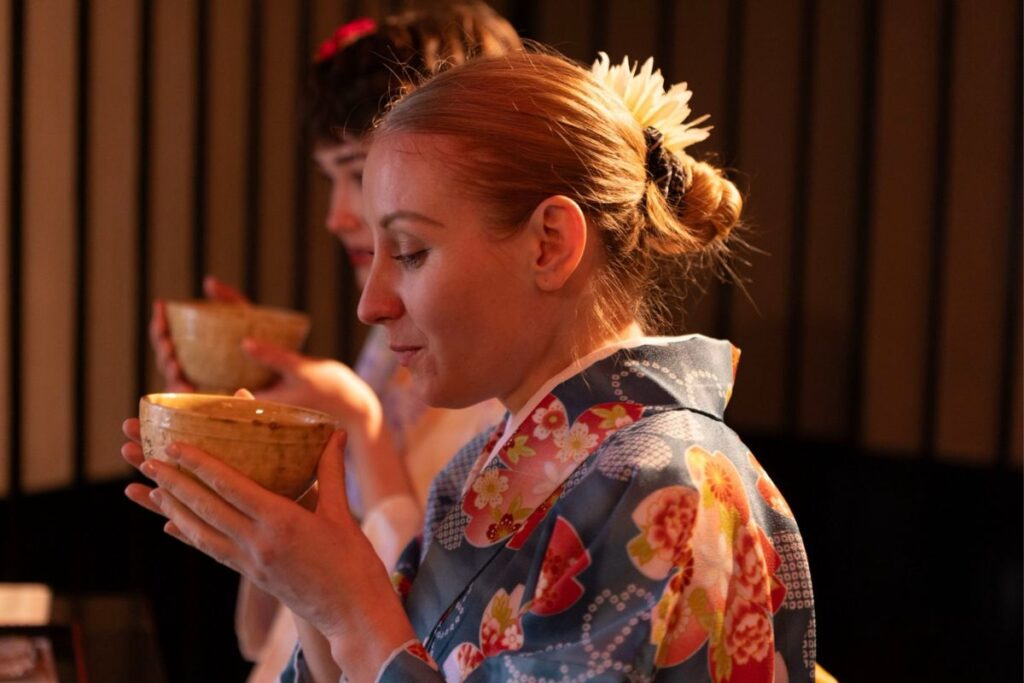
And in Chikusa Ward, the Furukawa Art Museumand its Tamesaburo Memorial Museum annex hold what is probably the most composed two hours available in the city. A certified kimono dresser, Kawamoto Michiko, works there under a philosophy she calls Universal Wasou — the principle that a kimono should fit whoever is wearing it, regardless of height, build, age or gender, rather than the other way round. Guests send their height and usual clothing size in advance. After dressing, there is a walk through the private heritage gardens with photographs at the spots she knows work, and then matcha whisked to order in museum-grade Seto or Mino ware, with a seasonal omogashi. Chairs and benches are available for the tea — nobody is required to kneel.
South-east along the Meitetsu: Arimatsu and the old Tōkaidō
Twenty minutes from Nagoya Station on the Meitetsu Nagoya main line, in the direction of the Okazaki and Toyota venues, the train stops at Arimatsu.
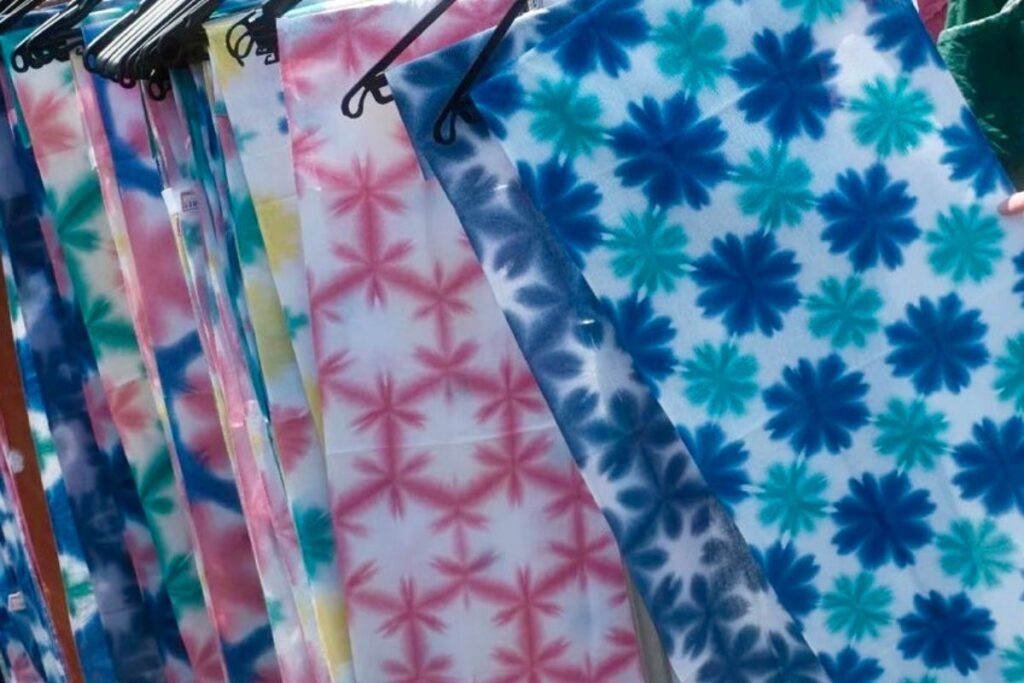
The district was founded in the early 1600s on a plain stretch of the Tōkaidō, the great road between Edo and Kyoto, and it survived by selling dyed cloth to people walking past. Four hundred years later, the Edo-period buildings are still standing and the craft is still being practised — Arimatsu-Narumi shibori, a resist-dyeing tradition with something over a hundred distinct binding techniques, of which a shrinking number are still held by anyone.
Honey J runs a private ninety-minute session at the oldest workshop in the district to teach it, with a master craftsman and a dedicated English interpreter — which matters here, because the instruction is technical and precision-dependent in a way that gestures do not cover. You fold, twist, clamp and bind, the cloth goes into the dye, and the moment the piece works is the moment the threads come off and a geometry you could not have predicted appears in the fabric. The finished textile is washed, dried, mounted on presentation paper, stamped with the workshop’s seal, framed and handed to you the same day. There is no minimum age; children from kindergarten upward manage it. For groups of ten to fifteen, the workshop can arrange an alternative kominka venue.
If you are attending anything in Okazaki, Toyota or Anjo, Arimatsu is on your line.
The Chita Peninsula: Tokoname, Sky Expo and the kilns
Aichi Sky Expo — breaking, skateboarding, esports — is in Tokoname, next to Chubu Centrair International Airport, and it is the venue most likely to leave a visitor stranded in an unfamiliar part of the prefecture with an afternoon to fill.
Tokoname is one of the Six Ancient Kilns. The old quarter is a hillside of brick chimneys and lanes walled with stacked pipes and shards, and there is a marked walking route through it. It is also, less famously, a brewing town.
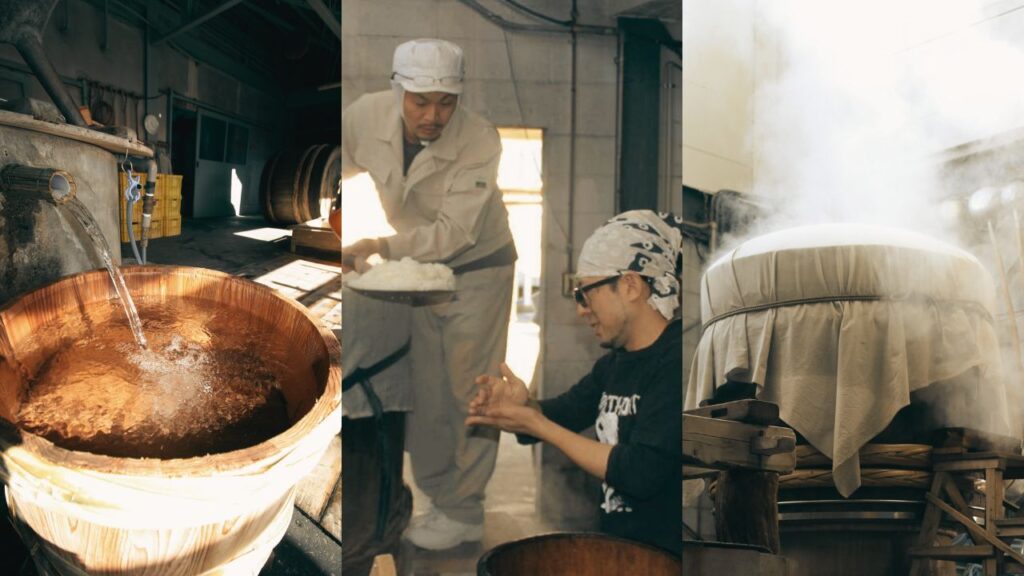
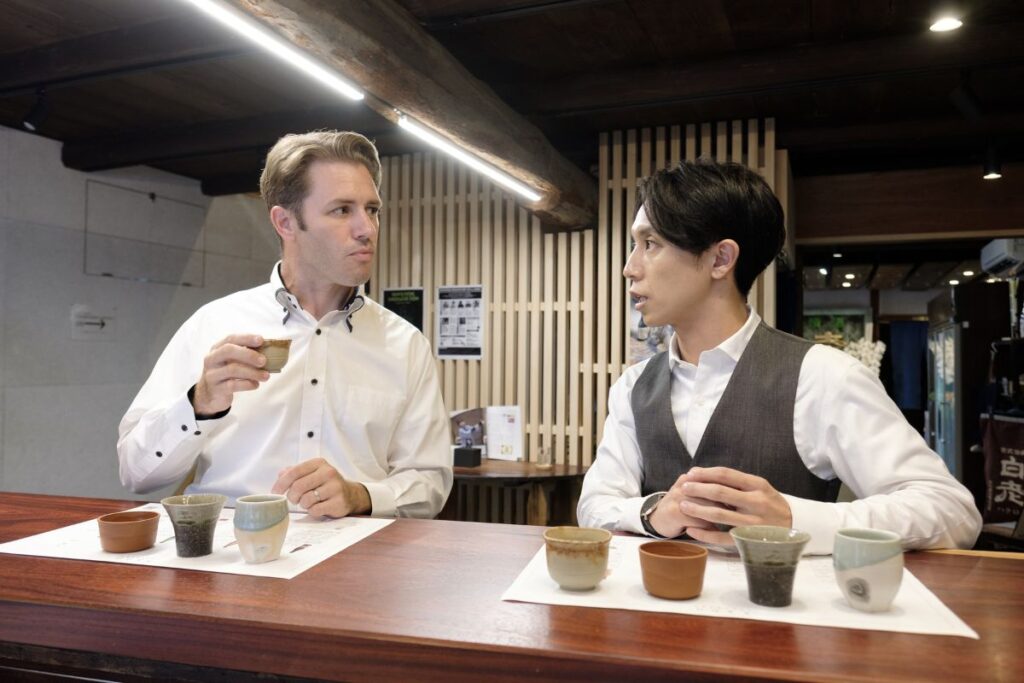
Sawada Sake Brewery has been operating here since 1848, and the owner takes guests through it himself, in English. You see the koshiki rice vat, the wooden koji boxes, the well. Then there is a tasting flight of the house Hakurou sakes with a seasonal namazake and a plum wine, paired with a plate of Aichi fermented snacks — which closes the circle, because the fermentation culture in the glass and the fermentation culture on the plate come from the same peninsula.
The detail that makes it: the tasting uses a set of four cups called Sasara-ke, each thrown by a different Tokoname potter — Shimizu Kohokujo’s unglazed textured piece, Koichiro Takeuchi’s ash glaze, Hitoshi Tanikawa’s seaweed-fired cup, Mami Kato’s white and pale blue. The same sake tastes different in each, which is the point, and at the end you choose one and take it home. It is the only souvenir in this guide that is also an argument.
Practical notes, because they are unusually specific: the legal drinking age in Japan is twenty, designated drivers cannot taste, and the brewery asks guests not to eat natto on the day of the visit — its bacteria interfere with brewing. Also skip strong perfume.
East on the Meijo Line: Higashi Ward and Yada
The Meijō Line is a loop, and it is quietly the most useful thing in this guide. It stops at Nagoyajō for IG Arena and the castle. It stops at Mizuho Undōjō Higashi for the main stadium. And it stops at Nagoya-Dome-mae Yada, which is where the Chunichi Dragons play and where, on days without a game, the neighbourhood goes back to being an ordinary residential grid of narrow streets, bicycles and laundry on balconies.
Nothing here appears on a list of things to see in Nagoya. That is the reason to come.
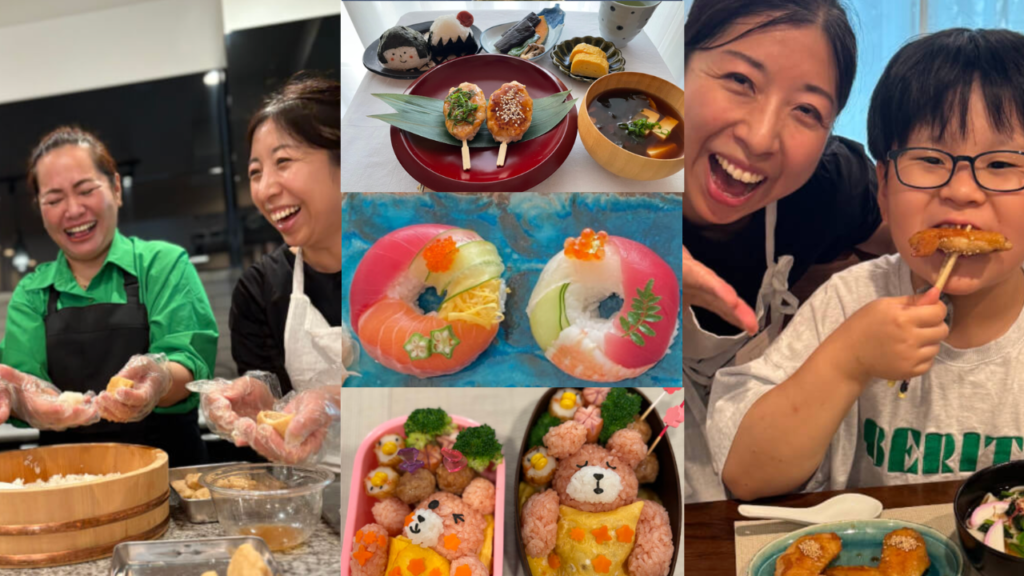
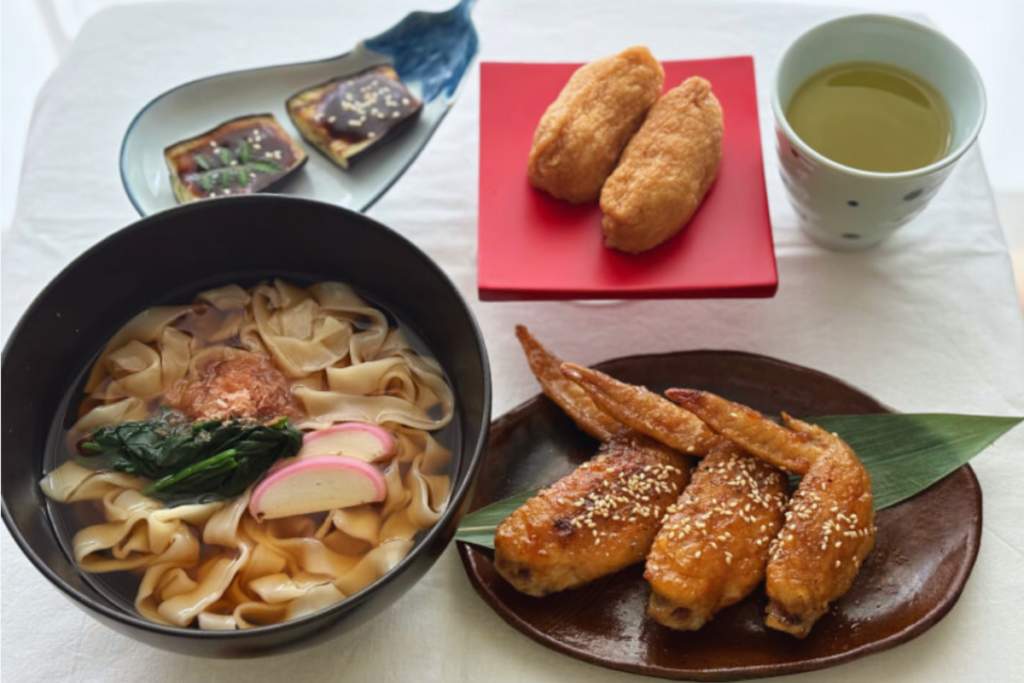
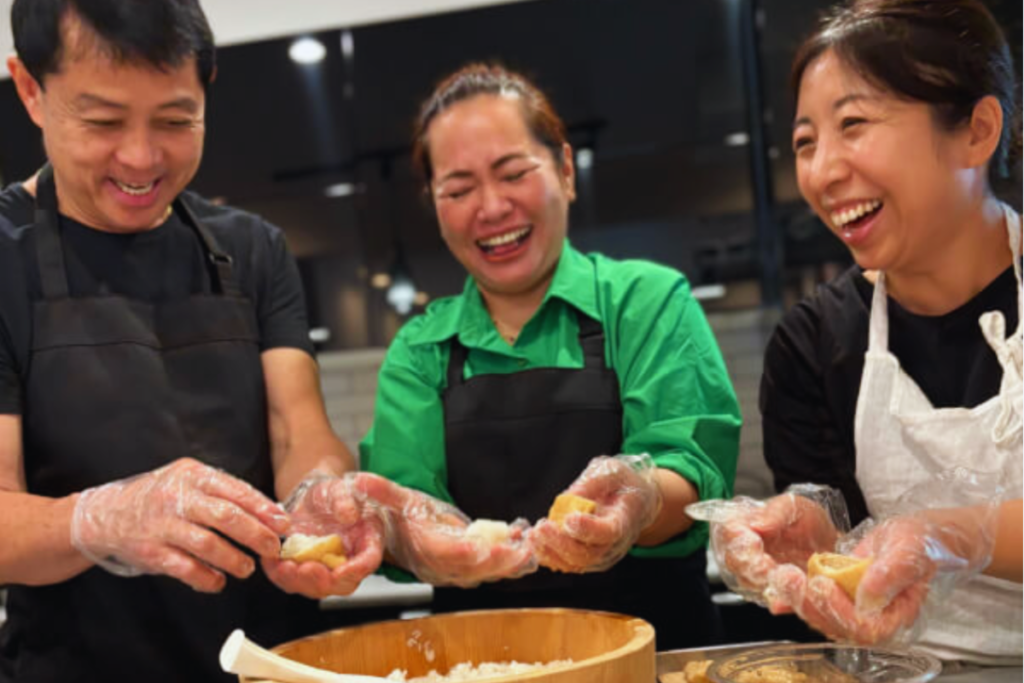
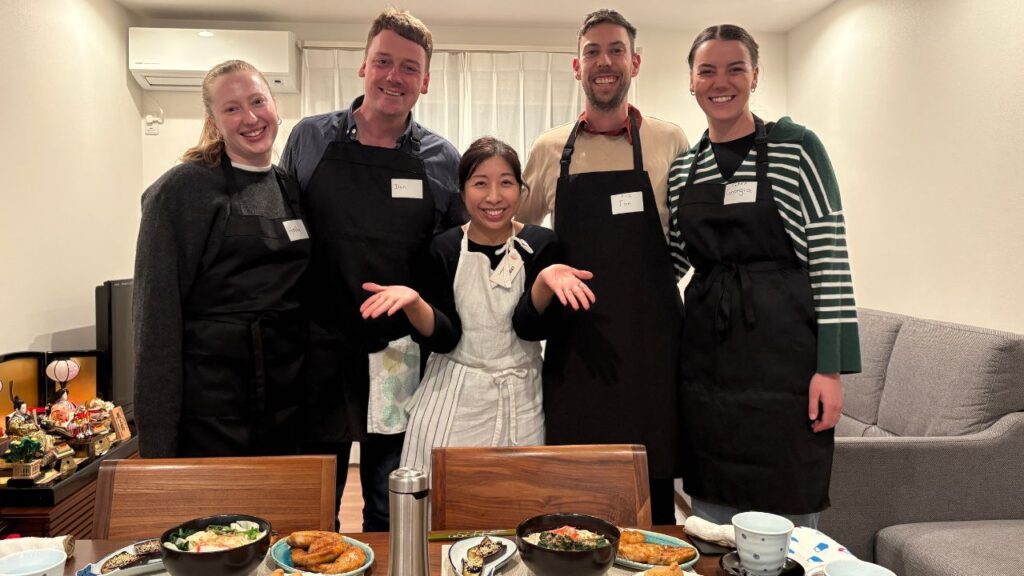
On one of these streets — you are given the address once you book, which is the arrangement any of us would want if we were the one opening the door — Yuko Takimoto teaches a private cooking class in her own kitchen. Two and a half hours, one to five guests who all arrived together, in English. You choose the menu before you come: the regional Nagoya meshi repertoire, the ichiju sansai structure that sits underneath nearly every Japanese meal, doughnut sushi, or a character bento if you have a child between about six and twelve.
It opens with dashi, which takes twenty minutes and is almost entirely waiting. Kombu into cold water, never boiled; then katsuobushi for a matter of seconds, then strained. Two ingredients, no fat, no browning. What comes out underpins most of what you have been eating all week, and once you can make it, an enormous amount of Japanese food becomes legible. Then the menu itself, with your hands on it, and then everyone sits down and eats what was made. You leave with written recipes and photographs from the afternoon.
This is the answer for anyone who has spent five days eating Nagoya meshi in restaurants and wants to know what people here actually eat at home. It is twenty minutes from Nagoya Station and fifteen from Sakae, on the same subway loop as two of the venues.
Further out, and on a different line, Inuyama sits on the Kiso River where Aichi meets Gifu, about thirty minutes from the city beneath one of Japan’s oldest surviving castle keeps. It is a good half-day if you have one.
If You Only Have…
afternoon start — two and a half hours, and you eat at the end of
it. Twenty minutes from Nagoya Station on the Meijo Line, which is
the same loop that serves Mizuho Park. Or the yukata photo session
through Osu, which runs evening slots and puts you in the most
interesting neighbourhood in the city at the best hour for it.
Go north. See the last section.
A Day in Nagoya, Around the Games
An example, built around an evening session at Mizuho Park. Adjust to your own tickets — and check the official schedule, because session times move.
08:30 — Breakfast, and the walk through Sanno-maru if the race walk is on. Twenty minutes of it is enough to understand why the course was routed here.
10:00 — Nishi Ward. Ninety minutes of calligraphy, or the koto if you are more than two. Quiet room, no phones, one thing to concentrate on.
12:00 — Lunch near Nagoya Castle. Miso nikomi udon if the weather has turned; hitsumabushi if you want the regional dish everyone will ask you about.
13:30 — The castle grounds and the Hommaru Palace, or the Tokugawa Art Museum if you would rather be indoors.
16:00 — Back to the hotel. Change. Eat something small; stadium food is stadium food everywhere.
18:00 — Mizuho Park.
22:00 — Osu, which is still awake, and which is where you will end up talking to people from four other countries about a race none of you had heard of a week ago.
Have More Than a Day? Go North.
Two hours and a bit from Nagoya on the Hida limited express, the train follows a river up into the mountains and arrives at Takayama.
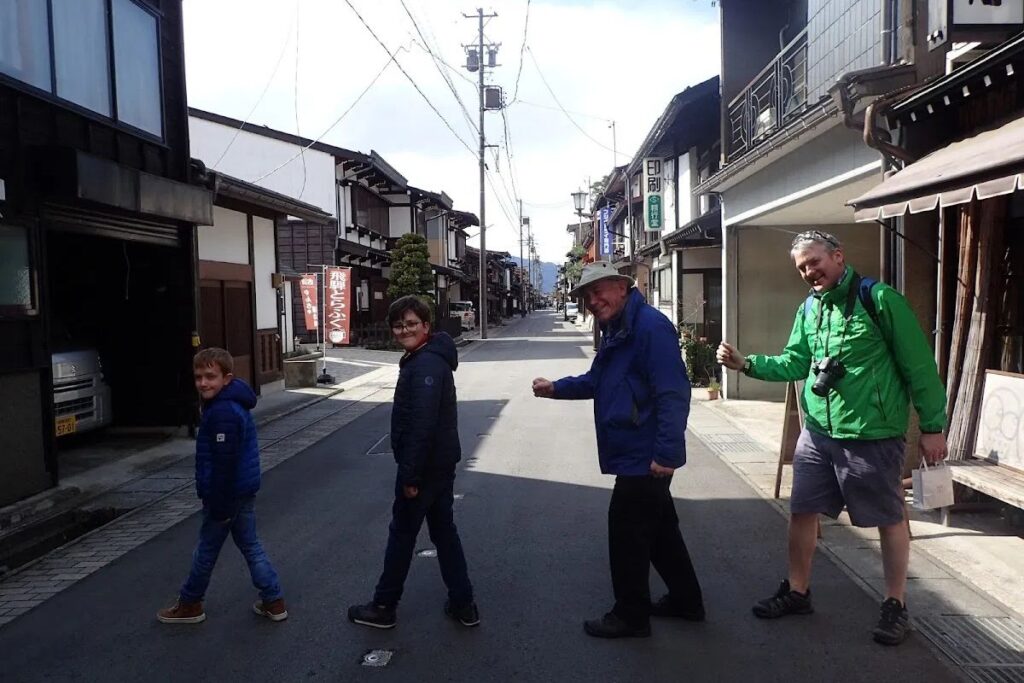
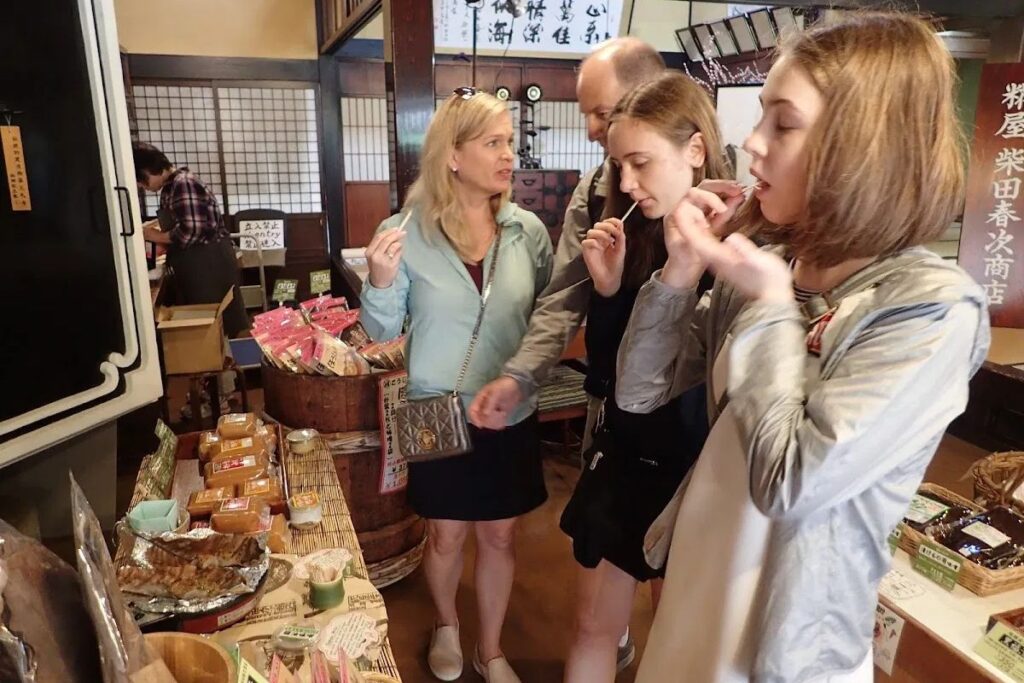
Hida developed in isolation — hard winters, dense forest, and a slow cultural drift down from Kyoto and across from Edo that arrived late and settled into something local. What came out of it is craft: woodwork above all, but also shunkei lacquer, sashiko stitching, and woodblock printing, held by family businesses that have been at it for generations. A private craft walk through the old town with a guide who knows which doors open is a different proposition from wandering the same streets with a map, and it is the difference between seeing shops and meeting a trade. There is a food tour on the same principle.
Ten minutes further up the line, Hida Furukawa is what Takayama was before people found it — white storehouse walls, a carp canal, and almost nobody. A private town walk there is the recommendation for anyone who has already done Kyoto and is quietly looking for the thing Kyoto used to be.
Both are genuine extensions rather than day-trip padding, and Gifu is already hosting Games events at Nagaragawa Stadium and the Green Stadium, so you are not leaving the region.
Arranging It
Most of what is described here is not on a booking platform. The kimono dresser at the Furukawa Art Museum takes two to six guests at a time. The Arimatsu workshop takes five. The brewery owner runs his own tours. These are small operations run by people who are practising a trade, not running an attraction, and during a sixteen-day international event with a Para Games behind it, the calendars will not stay open.
Honey J Corporation is a Government-Licensed Class 1 Travel Agency (Licence No. 2149), headquartered in Nagoya, holding TQJ Tour Operator Quality Assurance certification. What that means in practice is that the relationships above are direct, the arrangements are underwritten, and someone in the same city can rearrange your afternoon when a quarter-final overruns.
If you are coming for the Games with an itinerary that is mostly stadiums and gaps, tell us what the gaps are. We will tell you what is next to them.
Private experiences across Aichi and Central Japan. We typically reply within 24 hours.
よくある質問 · Before you book
Frequently asked questions
When are the Asian Games in Nagoya?
The 20th Asian Games Aichi-Nagoya 2026 run from 19 September to 4 October 2026. The opening ceremony is at Paloma Mizuho Stadium in Nagoya on the evening of 19 September and the closing ceremony is there on 4 October. Some ticketed competition begins earlier — the official schedule has events from 10 September. The 5th Asian Para Games follow from 18 to 24 October 2026.
Where are the Asian Games being held?
Across 54 competition venues, most of them in Aichi Prefecture. The largest cluster is in Nagoya City — Mizuho Park, IG Arena beside Nagoya Castle, the Nagoya City General Gymnasium and Portmesse Nagoya. Others are spread across Toyota, Okazaki, Toyohashi, Ichinomiya, Kasugai, Anjo, Nisshin, Nishio, Komaki, Inazawa, Tokoname, Gamagori, Tahara and Hekinan. Some events are outside the prefecture: swimming, diving and equestrian in Tokyo, track cycling in Izu, football at Nagai Stadium in Osaka, and rowing and other events in Gifu. Check the venue for every session you book.
What can I do in Nagoya besides watching the Games?
Within the city: a private calligraphy or koto lesson in Nishi Ward, ten minutes from Nagoya Castle and IG Arena; a kimono and matcha session in the private gardens of the Furukawa Art Museum; wagashi-making and tea at the Toin Chaseki tea house in Nakamura Park; a yukata photo session through the Osu arcades. and a private cooking class in a family home in Higashi Ward, twenty minutes out on the Meijō Line. Further afield: shibori dyeing at a four-hundred-year-old workshop in Arimatsu, and a sake brewery from 1848 in Tokoname.
What should I eat in Nagoya?
The local cooking is built on dark, long-aged soybean miso from the Chita and Handa area, which is why it looks and tastes unlike food elsewhere in Japan. The dishes to try are hitsumabushi (grilled eel over rice, eaten three ways), miso katsu, miso nikomi udon, tebasaki chicken wings and ankake spaghetti. Collectively this is called Nagoya meshi. It is restaurant food, though — for what people here actually eat at home, a private cooking class in a family home is a different and better answer.
What cultural experiences are available in Aichi?
Aichi’s living traditions are ceramics (Tokoname and Seto, two of Japan’s Six Ancient Kilns), textiles (Arimatsu-Narumi shibori, practised since the early 1600s), tea (Nishio matcha, grown and ground in the prefecture) and fermentation (miso, vinegar and sake on the Chita Peninsula). Private, English-supported access to all four is available through Honey J Travel, in workshops and homes rather than visitor centres.
What food is Nagoya known for?
Nagoya meshi: hitsumabushi (grilled eel over rice, eaten three ways), miso katsu, tebasaki chicken wings, kishimen flat noodles, tenmusu rice balls with shrimp tempura, and miso nikomi udon. The common thread is the local mame-miso — a dark, salty, rice-free red miso quite unlike the pale miso found elsewhere in Japan.
What is there to do near Aichi Sky Expo?
Aichi Sky Expo is in Tokoname, next to Chubu Centrair International Airport. Tokoname is one of Japan’s Six Ancient Kilns: the historic Pottery Footpath through the old quarter is a short distance away, and Sawada Sake Brewery — brewing on the site since 1848 — offers owner-led tours and tastings in English. It is the best use of an afternoon at that end of the prefecture, and convenient before a flight.
How many days should I spend in Nagoya?
If you are attending the Games, add at least two days that are not committed to sessions — one for the city and one for the region. Nagoya’s cultural sites, Osu and the castle district fill a day comfortably. A second day covers Arimatsu, Tokoname or Inuyama. With a third, take the Hida limited express north to Takayama and Hida Furukawa in Gifu.
Can I arrange a private itinerary around the Asian Games?
Yes. Honey J Corporation is a Government-Licensed Class 1 Travel Agency headquartered in Nagoya (Licence No. 2149, TQJ-certified) and arranges private cultural and culinary experiences, artisan visits, day trips across Aichi and Central Japan, and English-speaking guides — scheduled around competition sessions. Because most of the hosts work in groups of two to eight, availability during the Games period is limited and should be arranged in advance.
Share This Article
Ready to experience real Japan?
Private tours, year-round. Tell us what you’re looking for and we’ll build it around you.
旅